
If you have sensitive, reactive, or easily irritated skin, you have probably landed on both Vanicream and CeraVe at some point. Both are sold at the drugstore. Both are recommended by dermatologists. Both are fragrance-free. And both have ceramides and hyaluronic acid in the formula. So why does one feel completely different on your skin than the other, and which one should you actually be using?
I spent four weeks alternating between Vanicream Daily Facial Moisturizer and CeraVe Moisturizing Cream, morning and night, on my own combination-sensitive skin that flares whenever I introduce anything new. I kept notes on texture, breakouts, tightness, and how my skin looked after a week of consecutive use. Here is what I found, broken down honestly so you can pick the right one for your skin type without wasting your money on the wrong jar.
| Vanicream Daily Facial Moisturizer | CeraVe Moisturizing Cream | |
|---|---|---|
| Fragrance-Free | Yes, certified fragrance-free and dye-free | Yes, fragrance-free |
| Ceramides | Yes (ceramide NP, AP, EOP) | Yes (ceramides 1, 3, 6-II) |
| Hyaluronic Acid | Yes, sodium hyaluronate listed | Yes, sodium hyaluronate listed |
| Texture | Light gel-cream, absorbs quickly with no residue | Thick, occlusive cream with a heavier finish |
| Sensitive Skin Rating | Formulated without common irritants (parabens, dyes, lanolin, fragrances, formaldehyde releasers) | Gentle, but contains some additives like cetearyl alcohol and dimethicone |
| Best For | Reactive, acne-prone, or allergy-sensitive skin types | Dry to very dry skin needing a heavier moisture barrier |
| Price Tier | Budget-friendly, generous pump bottle | Similar price range for a 16 oz tub |
Your sensitive skin deserves a moisturizer built for it, not just adapted to it
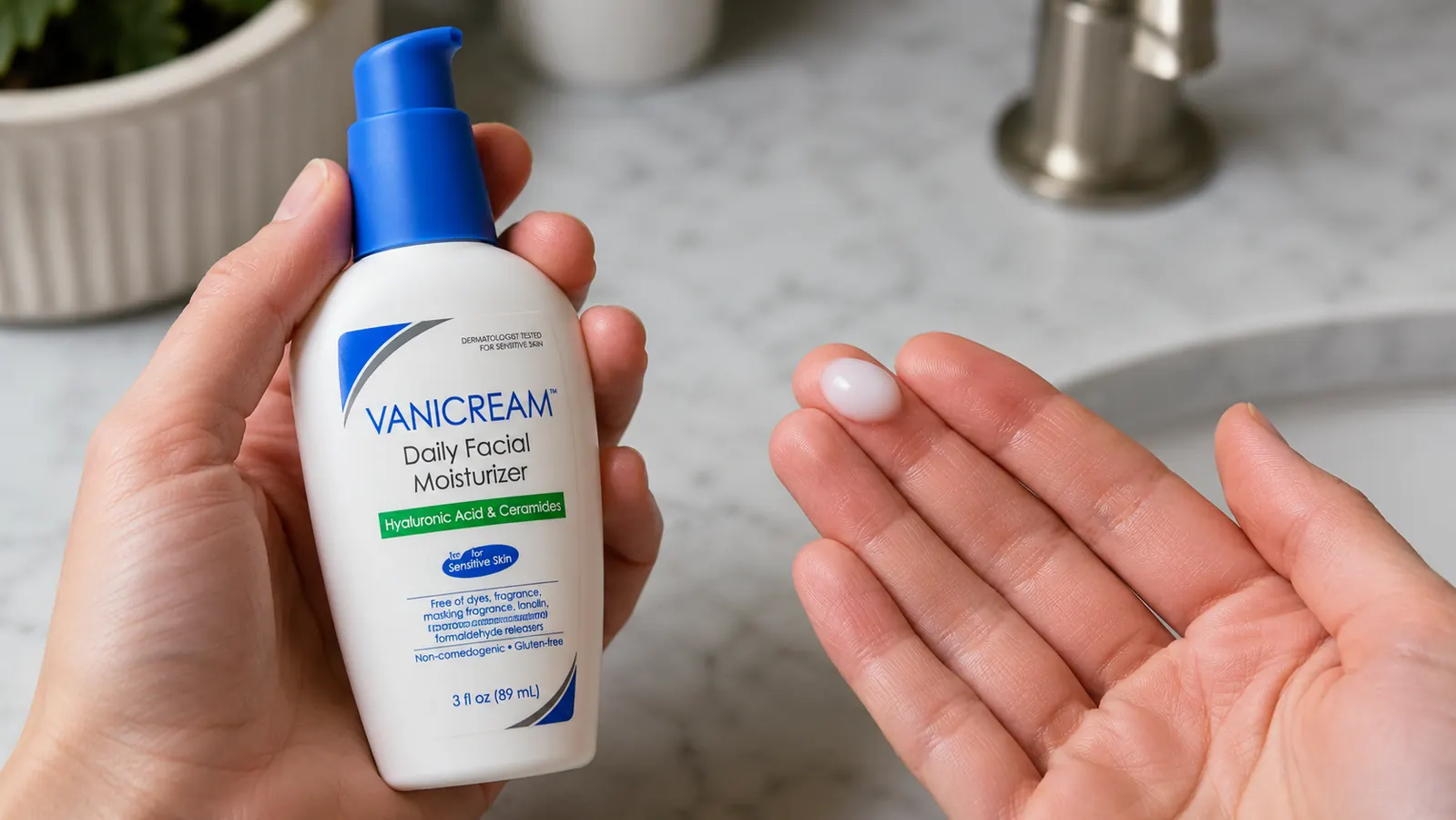
Vanicream Daily Facial Moisturizer skips the extras that trigger reactive skin, while still delivering ceramides and hyaluronic acid. Over 24,000 customers with sensitive and allergy-prone skin have made it a staple. See the current price on Amazon and check whether it fits your routine.
Amazon Check Today's Price on Amazon →Where Vanicream Wins
The biggest thing Vanicream does better is what it leaves out. The formula is certified free of fragrance, dyes, lanolin, parabens, and formaldehyde releasers. That last category matters more than most people realize. Formaldehyde releasers are preservatives that slowly release small amounts of formaldehyde over time, and they are a surprisingly common allergen in skincare. CeraVe Moisturizing Cream does not contain them either, but Vanicream goes further by cutting nearly every ingredient category that commonly shows up on dermatologist patch-test lists.
For people who have ever broken out from a moisturizer they could not figure out, or whose skin turned red and tight after trying a new product even though it said "gentle" on the label, Vanicream's stripped-down ingredient list is the point. Fewer ingredients means fewer opportunities for your skin to react. The gel-cream texture also absorbs cleanly, leaves no tacky film, and does not pill under SPF or makeup. I used it for two consecutive weeks in the morning under a tinted sunscreen and had zero issues with pilling or sliding, which has been a problem for me with thicker creams in the past.
The ceramide and hyaluronic acid combination does real work here. After a week of consecutive use, I noticed my skin felt less tight in the morning, which is usually the clearest signal that a moisturizer is actually doing something for my barrier rather than just sitting on top. If you have ever woken up with that papery feeling on your cheeks or forehead no matter how much moisturizer you applied the night before, barrier repair is what you actually need, and Vanicream targets that without unnecessary extras.
Where CeraVe Moisturizing Cream Wins
CeraVe Moisturizing Cream is a heavier, more occlusive product, and that is a genuine advantage for certain skin types. If you have severely dry skin, eczema, cracked hands, or you live somewhere with cold dry winters where your skin feels like it is drinking moisture straight out of the air and never getting enough, the thicker texture of CeraVe's cream creates a better physical barrier overnight. The dimethicone in the formula acts as a skin protectant that locks moisture in more aggressively than a lighter gel-cream can.
CeraVe also has a massive track record. With hundreds of thousands of reviews across its product line and decades of clinical use in dermatology offices, the brand's reputation for barrier repair is well established. CeraVe Moisturizing Cream specifically has been a staple recommendation for eczema-prone skin for years. If dryness is your primary problem and sensitivity is secondary, the heavier formula may genuinely serve you better than Vanicream's lighter option.
After switching to Vanicream for two weeks straight, my morning tightness was gone. That is the clearest sign of real barrier repair I have found in a drugstore moisturizer.
The Formula Differences That Actually Matter
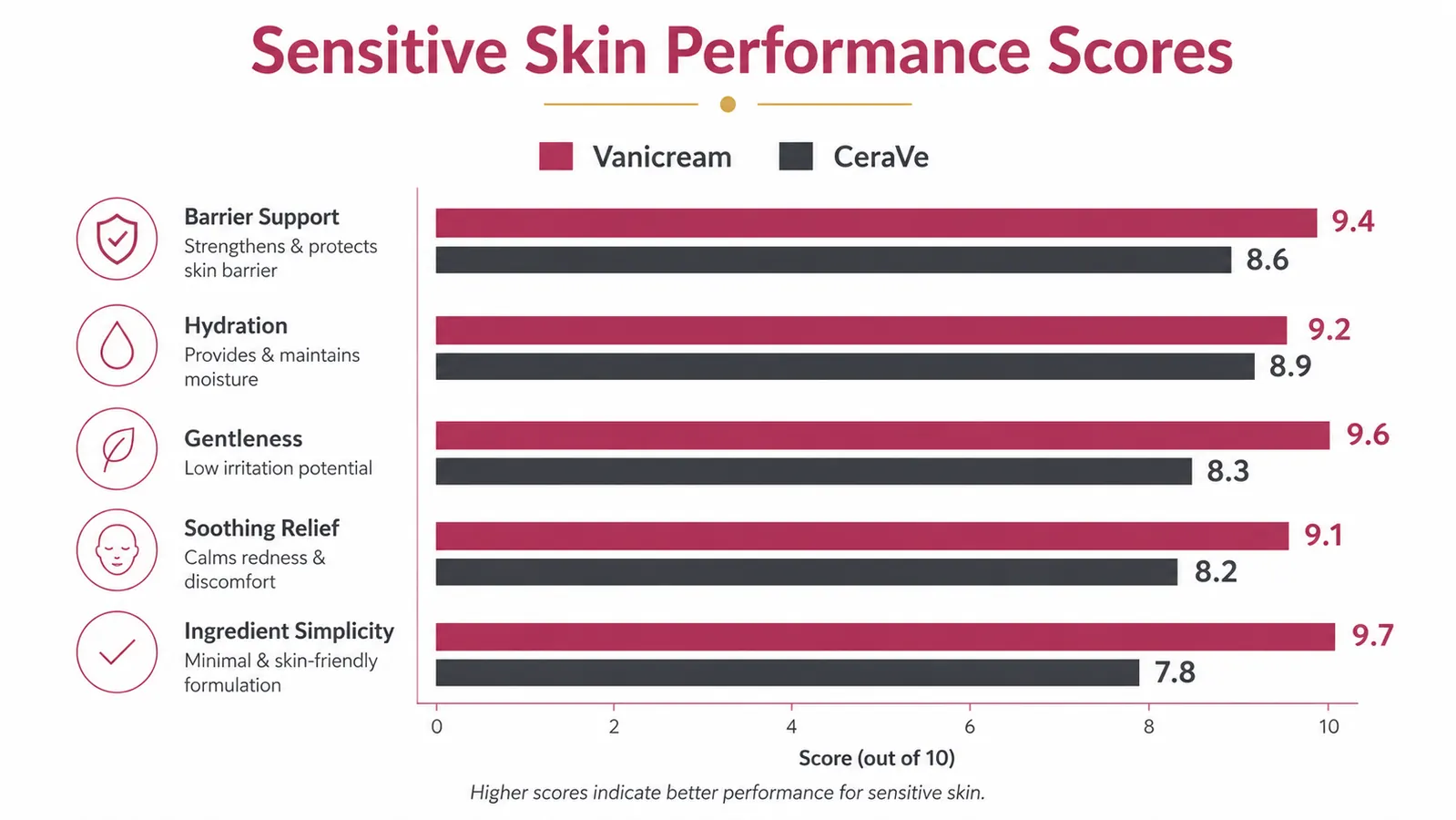
Both products contain ceramides and hyaluronic acid, so you might assume the formulas are essentially the same with different textures. They are not. The ceramide blends differ slightly: Vanicream uses ceramide NP, AP, and EOP, while CeraVe uses ceramides 1, 3, and 6-II. Both blends are supported by research on skin barrier function, so neither is clearly superior in the science. The real difference is in the supporting cast of ingredients around those ceramides.
Vanicream's formula is built around a philosophy of elimination. The brand started in pharmaceutical manufacturing for sensitive skin conditions, so the default is to strip everything non-essential. CeraVe's formula is built around a philosophy of delivery, using a patented multivesicular emulsion technology (called MVE) that releases ingredients in layers over time. Both approaches work. But if you have ever found that you react to a product even though it seems clean, the elimination approach is easier to troubleshoot because there are simply fewer variables in play.
The texture difference also affects how you use each product. Vanicream's gel-cream consistency makes it a natural morning moisturizer, easy to layer under sunscreen or makeup without building up product weight on your skin. CeraVe Moisturizing Cream is a better fit for nighttime use or for people who skip a separate face sunscreen and just want deep hydration. Using the heavy CeraVe cream in the morning under makeup can lead to that slippery, sliding foundation feeling that some people notice with thick creams.
Side Effects and Skin Reactions to Know About
Neither product is a guaranteed reaction-free experience for every person, and I want to be clear about that. Some acne-prone users report that CeraVe Moisturizing Cream breaks them out, even though it is labeled non-comedogenic. Cetearyl alcohol, which appears in CeraVe's formula, is a common pore-clogger for certain skin types. If you are acne-prone, the lighter Vanicream formula is generally the safer bet to start with.
Vanicream is not entirely without caveats either. The formula contains BHT, a synthetic antioxidant preservative that occasionally shows up on sensitivity lists. It is in the formula in a very small amount, and most dermatologists consider it safe, but if you have had a documented BHT sensitivity, it is worth knowing it is there. For the vast majority of sensitive skin types, Vanicream's short ingredient list makes reactions less likely, not more, compared to a longer formula.
Who Should Buy Which
Buy Vanicream if you have sensitive, reactive, acne-prone, or allergy-prone skin. If moisturizers consistently break you out, make your skin red, or cause that uncomfortable tightening sensation an hour after application, Vanicream's stripped-down formula gives your skin the ceramides and hydration it needs without the extras that tend to cause problems. It is also the better choice if you wear makeup or SPF in the morning and need a moisturizer that disappears cleanly underneath.
Buy CeraVe Moisturizing Cream if dryness is your primary concern rather than sensitivity. If your skin is so dry it flakes, cracks, or feels raw, especially in cold months, the heavier occlusive texture of CeraVe creates a better physical moisture lock overnight. People with eczema, psoriasis, or chronically parched skin will generally get more mileage from a thicker barrier cream than from a lighter gel-cream, and CeraVe's formula has a long track record in those cases. It is also worth trying if you use it body-wide and need a high-volume, cost-effective option, since the 16 oz tub goes a long way.
If you are genuinely unsure, start with Vanicream. The ingredient list is simpler, which means it is easier to rule out as a cause if you do react, and easier to confirm is working if you do not. You can always move to a heavier option later once you know your baseline.
Start with the formula that gives sensitive skin the fewest things to react to
Vanicream Daily Facial Moisturizer has over 24,000 Amazon reviews from people with reactive, allergy-prone, and dermatologist-directed skin routines. It is rated 4.6 out of 5 stars and priced accessibly for a daily-use product. Click below to see today's price and read what customers with skin like yours are saying.
Amazon Check Today's Price on Amazon →