

I started using CeraVe Eye Repair Cream on April 28th after my girlfriend pointed out that my under-eyes looked "hollow and puffy at the same time" in a photo from her birthday dinner. I was 34, sleeping a reasonable seven hours most nights, and still waking up with visible bags by 8 a.m. That seemed like a reasonable moment to actually commit to an eye cream instead of just thinking about it.
I chose CeraVe specifically because it was the least fussy option I could find. No peptide complex with a twelve-syllable name. No retinol I'd have to ease into. Just ceramides, hyaluronic acid, and niacinamide in a small jar that costs about what I'd spend on two drinks at a bar. I applied it morning and night for eight straight weeks, did not change anything else in my routine, and kept notes on what I was seeing. This is that report.
The Quick Verdict
A genuine workhorse for puffiness and dryness, but do not expect it to erase genetic dark circles or fully smooth deep lines.
Amazon Check Today's Price →Still waking up with puffy eyes no matter how much you sleep?
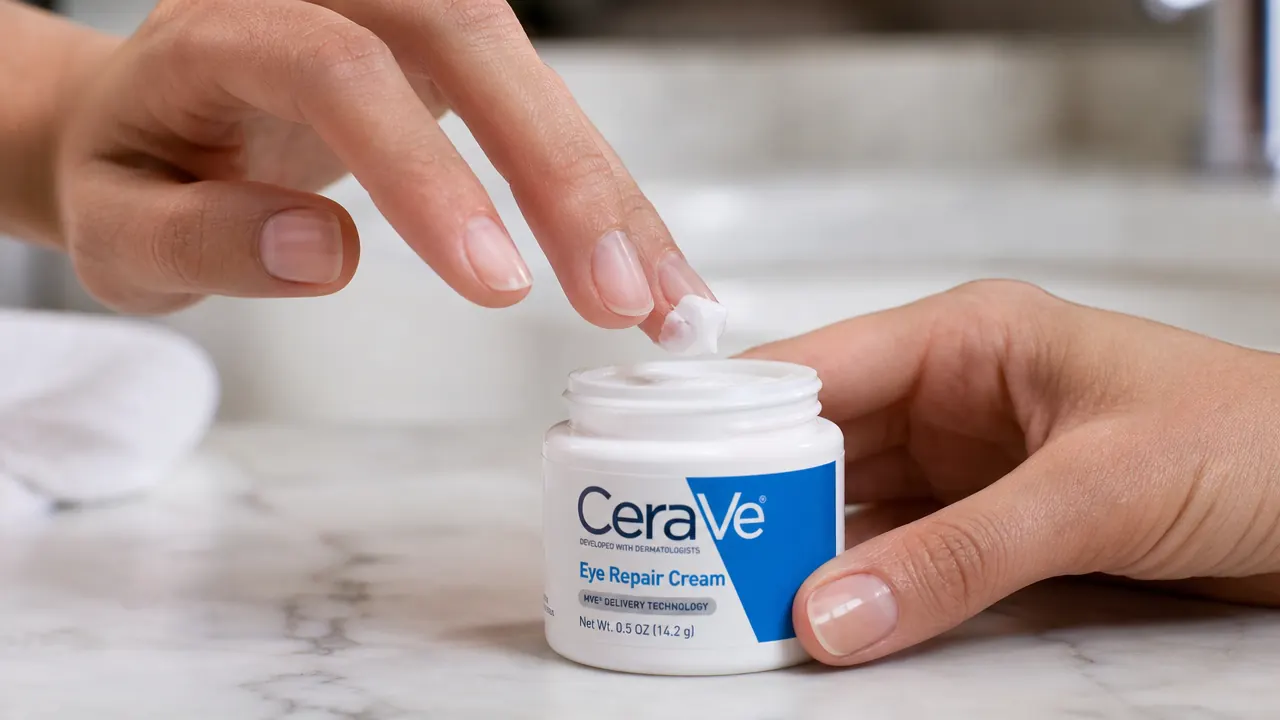
CeraVe Eye Repair Cream is one of the few drugstore options with both hyaluronic acid and niacinamide in a formula gentle enough for daily twice-daily use. Current pricing on Amazon is budget-friendly for a half-ounce jar that lasts most people two to three months.
Amazon Check Today's Price on Amazon →How I've Used It
My routine was deliberate and boring, which is exactly what I wanted. Every morning after washing my face and before sunscreen, I dotted a rice-grain-sized amount of Eye Repair Cream on my ring finger and pressed it along the orbital bone, starting from the inner corner and working outward. No rubbing. The directions say not to apply too close to the lash line, and I followed that. At night, I did the same thing after my moisturizer.
I kept everything else constant. Same CeraVe Hydrating Cleanser I've been using for two years. Same niacinamide serum in the morning. No new actives, no new pillow, no dramatic lifestyle overhaul. The whole point was to know whether the eye cream was doing anything, not whether my life changes were.
One practical note: the jar format makes contamination a real risk if you stick your finger directly in every day. I picked up a small cosmetic spatula from a dollar bin and used it to scoop product onto my finger. That is probably overkill for an eight-week test, but it is worth mentioning if you are going to use this long-term.
What Is Actually in This Cream
The three ingredients worth knowing are ceramides, hyaluronic acid, and niacinamide. Ceramides are lipids that help repair and maintain the skin's moisture barrier. The under-eye area has thinner skin than anywhere else on your face, which means its barrier breaks down faster and it loses water faster. Ceramide-based products address that directly.
Hyaluronic acid pulls water into the skin and holds it there. That is what creates the plumping effect that temporarily reduces the appearance of fine lines and the slight deflation that makes bags look worse. Niacinamide (vitamin B3) does a lot of things at once: it helps with uneven tone, supports barrier function, and has some data behind reducing the appearance of pigmentation over time, though it is not the strongest tool for deep genetic dark circles.
What this formula does not contain: retinol, caffeine, vitamin C, or any peptides. That is not a criticism. It is just useful to know. Caffeine is often cited for temporary puffiness reduction by constricting blood vessels. CeraVe Eye Repair Cream does not take that approach. Its puffiness reduction, if any, comes from improved hydration and barrier function rather than any vasoconstriction effect. The difference matters for managing expectations.
Weeks One and Two: Not Much, But Something
The first two weeks were unremarkable, which I expected. The skin under my eyes felt noticeably softer by day four. That sounds like a minor thing, but it was the first observable change. The texture of the under-eye area when I pressed gently was less crepey. Fine lines that look worse when the skin is dry were slightly less pronounced in morning light.
Puffiness during this window was the same as before. I would wake up, look in the mirror, and the bags were there. No drama. No irritation either, which I want to note because the under-eye area is sensitive and some products, even gentle ones, cause stinging or milia (those small white bumps under the eye). None of that happened with CeraVe. It absorbed without residue and did not pill under my sunscreen, which was a concern I had going in.
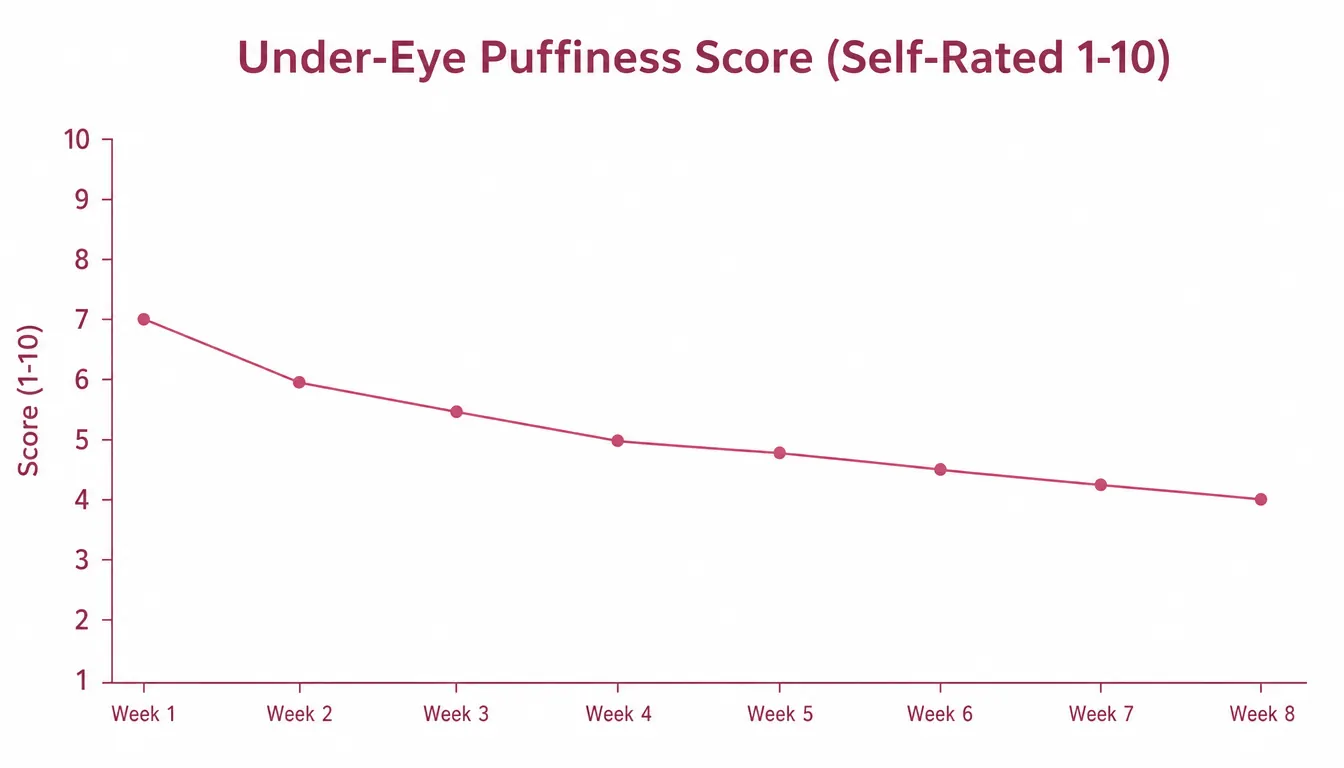
By week four my puffiness at 8 a.m. had gone from a 7 out of 10 to maybe a 5. That is not transformational, but it is real enough that I noticed it on my own without looking for it.
Weeks Three Through Six: Where the Real Changes Were
Week three was when morning puffiness started to come down. Not dramatically. Not the kind of difference that shows up in a before-and-after photo taken in the same fluorescent bathroom light. But visible to me in person, consistently. The bags were there but shallower. My under-eye area stopped looking waterlogged.
By week five I had stopped thinking about it much, which is probably the best outcome for a product like this. It had become background maintenance rather than a daily experiment. The under-eye skin looked healthier in a non-specific way. Mornings after I had drunk too much or slept fewer than six hours still looked rough, as they should, but the baseline level of puffiness on a normal-sleep day had settled lower than where I started.
Fine lines around the outer corner of my eye, the kind that appear when I smile, looked slightly softer. I would not call it a significant change. I would call it the kind of thing that is visible in good lighting and invisible in bad lighting. Realistic territory for an over-the-counter hydrating eye cream.
The Honest Truth About Dark Circles
I want to spend real time on this because I think it is where people get let down by eye creams in general, not just this one. My dark circles did not meaningfully improve over eight weeks. They were slightly less pronounced in weeks six through eight than in week one, but I cannot confidently attribute that to the cream versus improved hydration generally. My circles are the dark purple-brown kind that run in my family. My dad has them. His dad had them. They are vascular and pigment-driven, not shadow-driven.
There are two main types of dark circles. The first is volume loss and shadow, where the tear trough hollows out and casts a shadow under the eye. Good hydration and barrier support can help this type by plumping the skin slightly. The second is actual melanin deposit or visible blood vessels beneath thin skin. That type does not respond meaningfully to hyaluronic acid or ceramides. It responds to ingredients like vitamin C, kojic acid, or in more pronounced cases, to medical treatments. CeraVe Eye Repair Cream does not contain any of those.
Niacinamide has some published evidence for melanin inhibition, but the concentrations in cosmetic products are usually modest and the timeline is long. If your dark circles are primarily pigmentation or vascularity, be honest with yourself about what a hydrating eye cream can realistically do. This product will not fix genetic circles in eight weeks. Probably not in eight months. That is not a failure of the product. It is just an honest description of what the formula is built to do.

How It Performs Under Makeup and Through the Day
I do not wear makeup, but I pay attention to how products layer because I use SPF and a separate moisturizer. CeraVe Eye Repair Cream layered without any issues under my sunscreen. It absorbed fully in about sixty seconds and left zero residue. When I applied sunscreen over it, there was no pilling and no tackiness.
I asked my girlfriend, who wears under-eye concealer daily, to try it for three weeks as a base. Her report: it worked better than the heavier eye cream she had been using (a department store brand with a longer ingredient list) as a makeup base because it was thinner and did not crease. She said concealer went on smoother and stayed that way longer. Take that for what it is worth as a second data point.
One note on the jar size: the half-ounce jar looks small but lasts a long time with responsible use. I am six weeks in and have used maybe a third of the jar. The issue is not running out quickly. The issue, as I mentioned, is sanitary application from an open jar. If you use it with clean hands and a spatula, you will not have problems.
What I Liked
- Noticeably reduces morning puffiness within three to four weeks of consistent use
- Absorbs fully with no residue, making it compatible under SPF and makeup
- No irritation whatsoever, even on the thin and sensitive under-eye skin
- Ceramide and hyaluronic acid formula visibly softens crepey texture
- Fragrance-free, dye-free, non-comedogenic, low allergy and breakout risk
- Accessible pricing and widely available, no waiting on shipping from specialty retailers
- A small amount goes a long way, so per-use cost is low even if the jar looks tiny
Where It Falls Short
- Does not meaningfully address genetic, vascular, or pigment-driven dark circles
- Jar format requires a spatula or clean hands every application to avoid contamination
- No caffeine or vasoconstricting ingredients for acute morning puffiness reduction
- Fine line improvement is subtle at best and only visible in ideal lighting
- Contains no active brighteners like vitamin C or kojic acid for melanin-driven circles
- Some users may find the texture slightly rich for summer or humid climates
Who This Is For
This cream is built for people whose main complaint is that their under-eye skin looks dry, crepey, or dehydrated, and who deal with morning puffiness that is edema-related (fluid retention from sleep position, salt intake, or late nights) rather than purely structural or genetic. If your dark circles are mostly shadow from volume loss in the tear trough area rather than deep pigmentation, a consistent hydrator like this will help by plumping the skin enough to reduce that shadow effect. It is also a genuinely solid option for anyone who needs an eye cream that plays well under makeup and SPF without creating greasiness or texture issues. If you have never used an eye cream and want a low-risk, derm-recommended starting point, this is an excellent answer.
Who Should Skip It
If your primary concern is dark circles that are clearly pigment-driven or vascular (think purple or blue-toned circles that have been there since your twenties regardless of sleep), you need a different formula. Look for vitamin C or kojic acid in the ingredient list, or talk to a dermatologist about stronger options. If you are dealing with deep hollowing in the tear trough area, no topical cream will fully address that regardless of what it costs. That is a structural issue. And if you are hoping for a product that visibly transforms your under-eye area in a week or two, this will disappoint you. Its results are real but gradual, and they are maintenance-level improvements, not dramatic corrections.
Eight weeks in, still using it every morning. The puffiness is down and it costs less than most serums.
CeraVe Eye Repair Cream delivers on what a hydrating eye cream should do: barrier repair, puffiness reduction, and improved texture under the eye. If your expectations match the formula, it earns its spot. Check the current Amazon price below.
Amazon Check Today's Price on Amazon →