
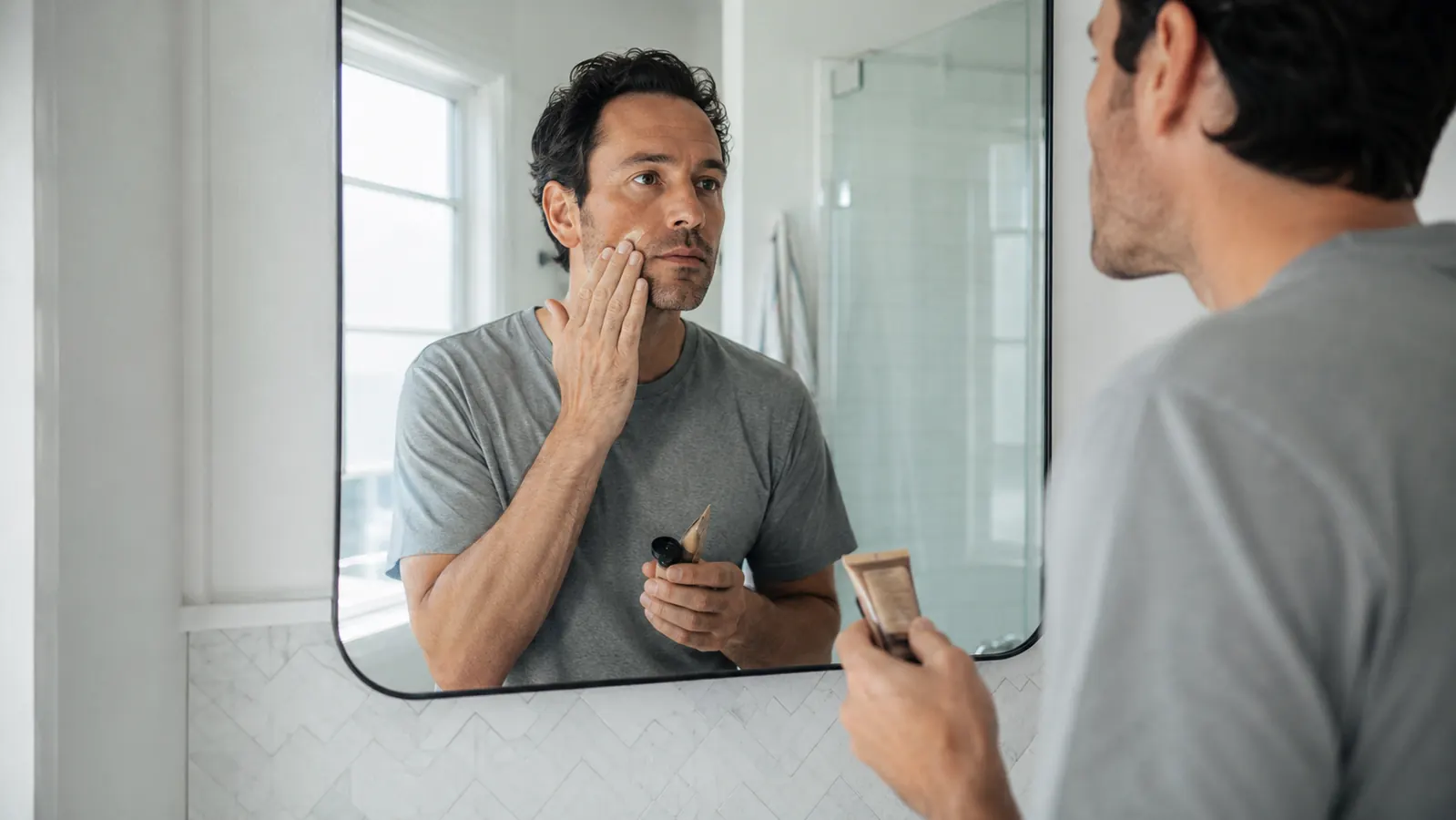
Four months ago I made a bet with myself. I had a bathroom counter full of serums, a moisturizer I liked, and a sunscreen I kept skipping because layering it over everything else turned my face into a slip-n-slide by noon. So I cleared the shelf, grabbed a tube of CeraVe Tinted Mineral Sunscreen SPF 30, and used it as my only face product every single morning from early March through the first week of July. No serum underneath. No separate moisturizer. Just the tinted SPF, rubbed in, and out the door. My skin is medium-light, prone to occasional dryness on the cheeks, with a small patch of post-acne discoloration near my jaw. That context matters because this product does not behave the same on every complexion.
This review covers the white-cast reality, how the tint reads on actual skin (not on an Amazon thumbnail), whether it layers under anything if you want to add a step back in, and what four months of daily mineral SPF did to my overall skin quality. I will not hype it. There are genuine tradeoffs. But I will tell you exactly who this product is built for, and it is a larger group than you might think.
The Quick Verdict
A genuinely well-formulated mineral sunscreen that doubles as a light complexion evening product, excellent for fair-to-medium skin, but honest about its limits on deeper tones.
Amazon Check Today's Price →If you keep skipping SPF because it wrecks your morning routine, this is the one that fixes that
CeraVe Tinted Mineral Sunscreen SPF 30 is hydrating, non-greasy, and sheer enough to wear alone. Over 72,000 Amazon reviews back it up. Check today's price before it changes.
Amazon Check Today's Price on Amazon →How I Used It Over Four Months
My test protocol was simple and a little boring. Every morning, after washing my face with a gentle cleanser and patting dry, I dispensed about three-quarters of a teaspoon of the product, warmed it between my palms, and pressed it into my skin starting at the center of my face and working outward. I let it set for about sixty seconds before going near any clothing. That is it. No moisturizer first, no primer after, no setting powder. On days when I reapplied around midday (anything involving extended outdoor time), I used the same amount again over bare skin after blotting off any midday oil with a tissue.
I documented my skin at weeks one, four, eight, and sixteen with the same phone camera in the same bathroom lighting. I kept a short daily note on texture, any breakouts, how my skin felt by mid-afternoon, and whether I noticed the product on my face at all. The results surprised me in a few specific ways I will get into below.
Over the same period I also tested it on two friends, both of whom agreed to try it for at least six weeks. One has fair, rosacea-prone skin. One has a medium-deep complexion closer to a warm olive-brown. Their feedback is woven into the sections below, particularly the tint and white-cast discussion, because my own medium-light experience does not tell the whole story.
The White-Cast Question: Answered Honestly
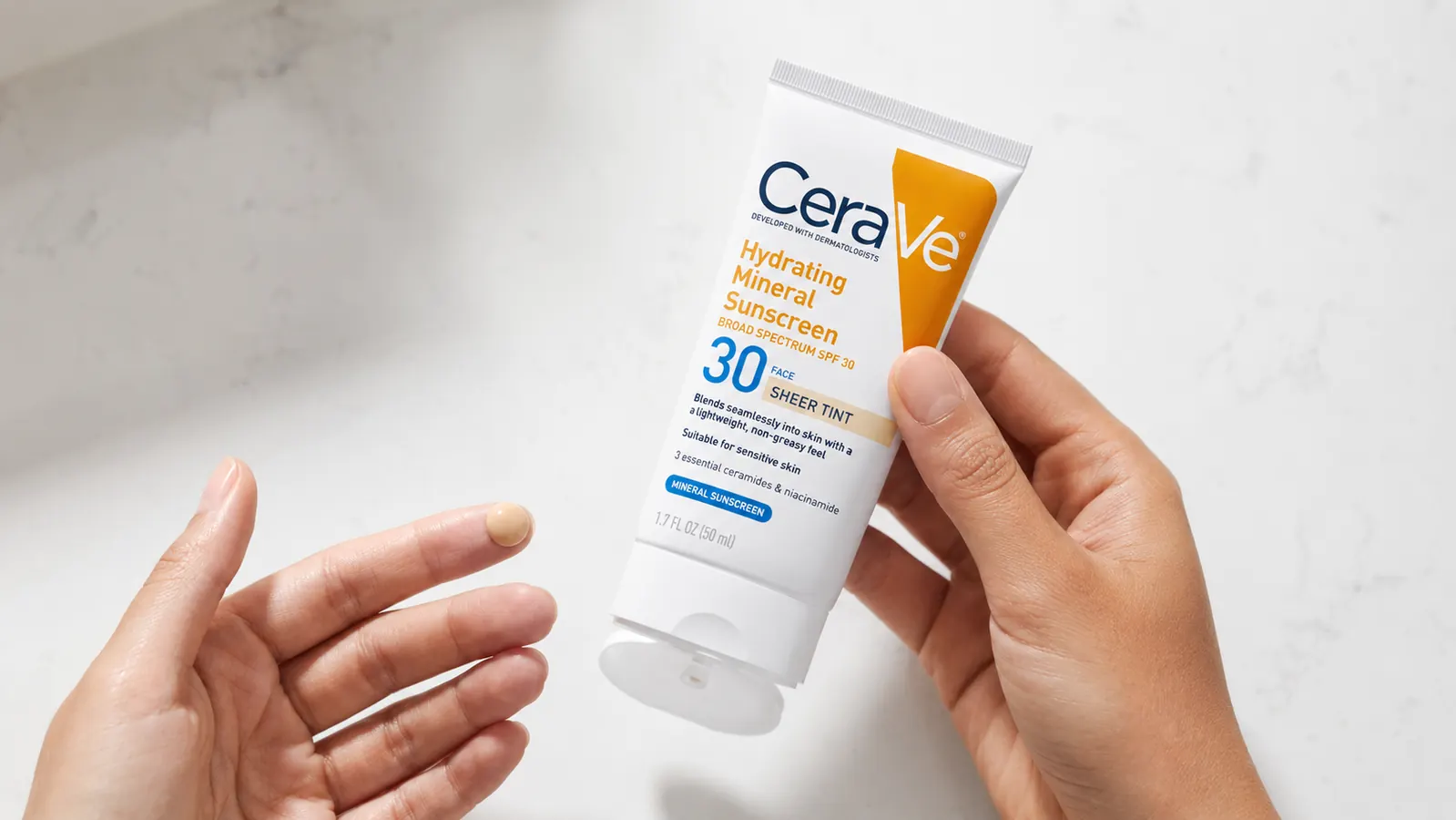
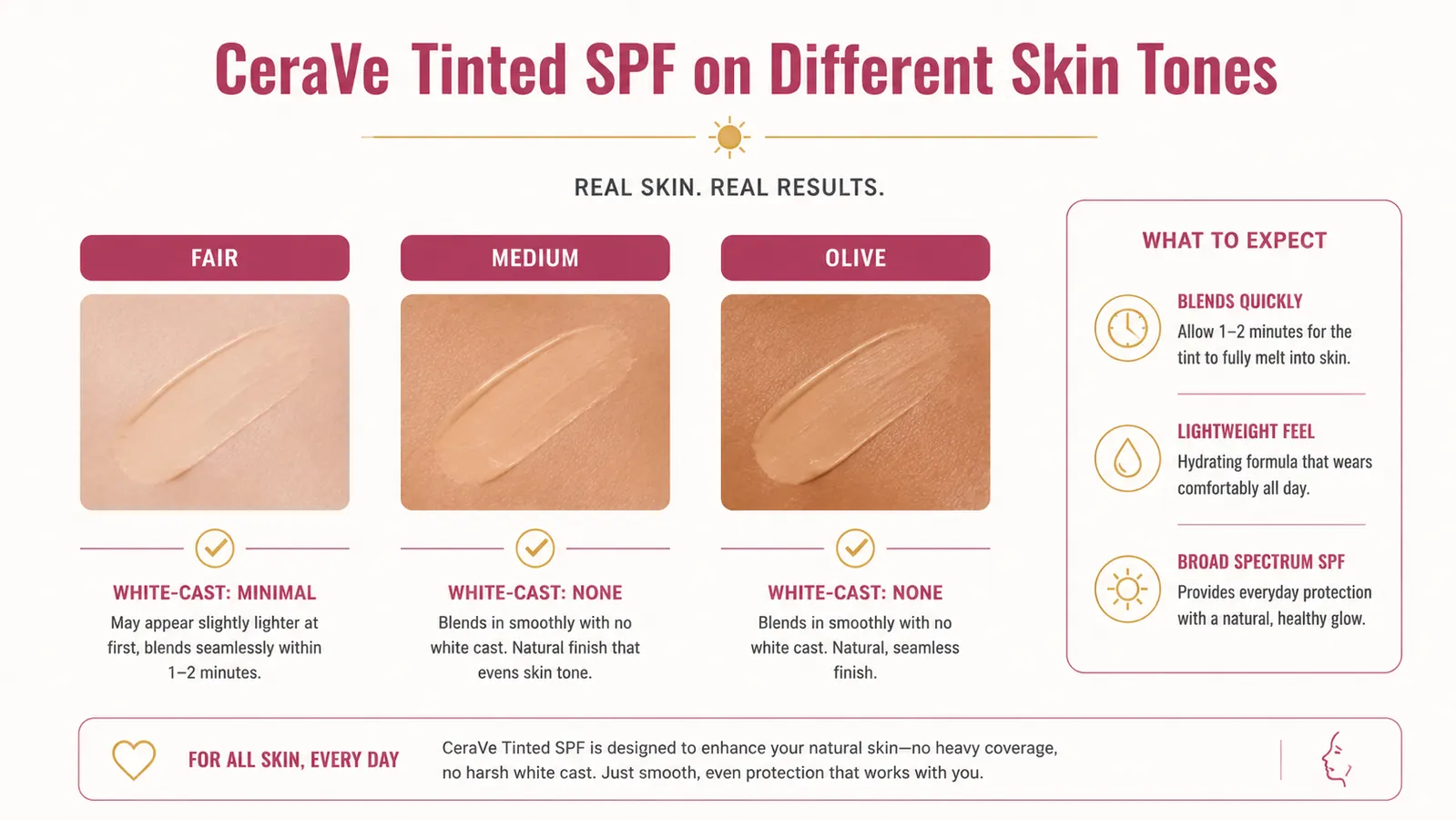
Mineral sunscreens use zinc oxide and titanium dioxide as their active filters. Both are physical blockers that sit on top of the skin rather than absorbing into it, and both are naturally white. That is where the white-cast problem comes from, and it is a real problem on certain skin tones. CeraVe addresses this with the tint: a sheer pigment suspension that warms the finish and neutralizes the chalky white. On my skin, it works almost completely. In the first thirty seconds after application it looks slightly pale, but by the time I have blended it fully and let it settle, the cast is gone and the finish is a warm, lightly matte glow that actually makes my skin look more even than it does bare.
On my fair, rosacea-prone friend, it was similarly invisible after blending. The tint color reads as a warm beige that sits close to neutral on lighter complexions. She reported that it also helped dampen the redness around her nose more than a plain untinted SPF would.
On my friend with the medium-deep, warm olive-brown complexion, the result was meaningfully different. The tint is simply too light. Even fully blended, she described it as a "pale haze" that made her skin look like she had rubbed diluted flour on it. She could make it work with a tinted moisturizer applied on top, but as a standalone product it was not serving her the way it served me. This is not a failure of formulation, it is a failure of the color range: there is currently only one tint shade, and it is calibrated for fair-to-medium skin tones. If your skin is medium-deep or deeper, read the cons section before ordering.
Formula Deep-Dive: What Makes This Different from Basic SPF
The active ingredients are 5% zinc oxide and 4.5% titanium dioxide, which puts this on the lower end of mineral SPF concentration. That is partly why the white cast is as manageable as it is: higher zinc percentages, which some mineral formulas use to reach SPF 50+, also leave a heavier physical presence on the skin. SPF 30 with a lighter mineral load is a deliberate tradeoff in favor of wearability, and for daily use in a city or suburbs it is a smart one.
The inactive ingredients tell a more interesting story. CeraVe builds in three essential ceramides (ceramide AP, EOP, and NP), niacinamide, and hyaluronic acid. These are the same ingredients you would find in a separate CeraVe moisturizer. The ceramides support the skin barrier, the niacinamide helps with tone and pore appearance, and the hyaluronic acid draws moisture into the skin. For someone who was previously layering a moisturizer and then a chemical SPF, collapsing those two products into one without losing the barrier support is a genuine benefit, not just a marketing claim. I noticed my skin felt less dehydrated on days I wore this compared to days I wore a plain SPF without ceramides.
The base is lightweight and water-based. It is non-comedogenic per CeraVe's own labeling, and over four months I did not experience any new breakouts I could attribute to the product. My existing occasional jawline congestion did not worsen. That said, no sunscreen is guaranteed non-comedogenic for every skin type, so if you are acne-prone, one month of solo testing is more informative than any review.
How the Tint Performs as Light Coverage
The tint does not function like foundation. It will not cover a red pimple or conceal a scar. Think of it as a skin-tone-correcting veil: it creates a more uniform surface by slightly evening out discoloration and reducing the visual contrast of minor imperfections. My post-acne discoloration near my jaw did not disappear, but it was noticeably less prominent compared to bare skin. In photos under natural light, the difference was visible enough that my partner asked whether I had started wearing makeup.
The finish is matte-to-satin, which I prefer to a dewy formula for everyday wear. By early afternoon my T-zone had developed the normal mid-day shine I get regardless of what I wear, but the product itself did not accelerate oil production or create that greasy-underneath feeling that some water-resistant sunscreens leave. On days I reapplied midday, the second layer went on smoothly without pilling or creating visible buildup.
By week eight, I stopped thinking about sunscreen as a separate step I had to get through. It had become the same mental category as brushing my teeth.
Layering: What Goes With It and What Does Not
After my four-month solo experiment ended, I spent two additional weeks layering the sunscreen over a separate moisturizer and under a setting powder to see how it held up in a fuller routine. Over a thin hydrating moisturizer it worked perfectly, with no pilling, no balling up, and no shift in the tint color. I let the moisturizer absorb for about ninety seconds before applying the SPF and that was enough. If you are not willing to skip your moisturizer, this product layers cleanly.
Under powder it was more conditional. A light translucent setting powder worked fine and extended the matte finish. A heavier pressed powder caused some uneven settling in my laugh lines after about three hours. If powder is part of your routine, go light-handed. Under foundation it becomes redundant from a coverage standpoint since foundation will cover the tint anyway, so you might as well use a standard untinted SPF under foundation to save money. The tinted version earns its place specifically when you want SPF plus a little skin correction with nothing else on top.
Reapplication is the one area where a mineral SPF shows its seams in a real-world routine. You cannot press SPF into skin over makeup without disturbing what is underneath. My solution was a tissue blot to remove excess oil, then a fresh thin application of the tinted sunscreen pressed in gently with my palms. It worked reasonably well, but was not invisible. If reapplication precision matters to you, a mineral SPF setting spray or powder SPF would give you cleaner results for touch-ups.
Four-Month Skin Results: What Actually Changed
By month two, the biggest shift was consistency. I had never worn SPF every single day before this experiment. My past habit was SPF when I planned to be outside, which in practice meant SPF maybe four days a week in summer and one or two days a week in winter. Four months of daily coverage meant my skin was receiving consistent UV protection for the first time. The discoloration near my jaw that I had attributed to post-acne marks faded measurably. My derm had told me for years that sun exposure was slowing the fading of those marks. Removing daily cumulative UV exposure appears to have made a real difference, which I attribute to the habit change more than to any magical ingredient in the product itself.
My skin texture felt smoother at the four-month mark compared to my phone-camera photos from the start. Whether that was the ceramides, the niacinamide, the consistent hydration, or simply the removal of UV microtrauma, I cannot fully isolate. Realistically it was all of those things working together. What I can say is that at week sixteen my skin looked calmer, more even, and slightly brighter than it did at week one. For a single product that costs less than two lattes, that is a return I was not expecting.
What I Liked
- Genuinely eliminates white cast on fair-to-medium skin tones after blending
- Ceramides, niacinamide, and hyaluronic acid mean you lose nothing by skipping a separate moisturizer
- Lightweight, non-greasy finish that stays comfortable through a full workday
- Non-comedogenic formula; zero new breakouts over four months of daily use
- Layers cleanly over moisturizer and under light powder with no pilling
- Over 72,000 Amazon reviews with consistent praise across skin types in its target range
- Genuinely affordable compared to equivalent tinted mineral SPFs in the prestige skincare space
Where It Falls Short
- Single tint shade that reads as pale on medium-deep and deeper skin tones
- SPF 30 is adequate for daily urban use but not enough for extended outdoor time, beach days, or high-altitude activities
- Reapplication over makeup is workable but not seamless, unlike a powder SPF
- Light coverage only: does not conceal active breakouts or significant discoloration
- Matte finish may not appeal to people who prefer a dewy glow look
Who This Is For
This product was built for the person who knows they should be wearing SPF every day but keeps not doing it because sunscreen feels like a burden. If your skin is fair to medium and you want one step that replaces your moisturizer and gives you a little tone correction on top, this is a genuinely well-designed answer to that problem. It also works well for anyone with sensitive or reactive skin who cannot tolerate chemical UV filters (avobenzone, oxybenzone, octinoxate), since mineral zinc and titanium are far less likely to trigger sensitivity reactions. People with rosacea or post-inflammatory redness often find that the tint helps dampen the visual contrast of redness in a way that plain SPF does not. If that is you, this is worth a serious look.

Who Should Skip It
If your skin is medium-deep, deep, or has a strong warm undertone, the single available tint shade is going to leave you with a visible pale cast. That is a real limitation, not a fixable one with technique. A tinted SPF with a broader shade range, or an untinted mineral SPF paired with a foundation or BB cream in your actual shade, will serve you better. You should also skip this if your primary sun exposure happens outdoors for extended periods. SPF 30 is not the right tool for hiking, beach days, or yard work where you will be in direct sun for hours. Reach for SPF 50+ in a water-resistant formula for that. And if your goal is actual coverage, meaning you want to hide a blemish or cover significant redness, this will not get you there. The tint is sheer by design. You need concealer or foundation for that job.
Stop skipping SPF because it ruins the rest of your morning routine
Four months in, this is the product that finally made daily sunscreen a real habit for me. CeraVe Tinted Mineral Sunscreen SPF 30 handles hydration and light coverage in one step. Check the current price on Amazon and read the reviews from people with your skin type.
Amazon Check Today's Price on Amazon →If you want to dig deeper into the mineral-versus-chemical debate before deciding, the 10 reasons mineral sunscreen protects skin better for sensitive types article covers the science without the jargon. And if you are weighing this against La Roche-Posay's tinted mineral SPF at triple the price, the direct comparison breaks down exactly where the price difference is and is not justified.