
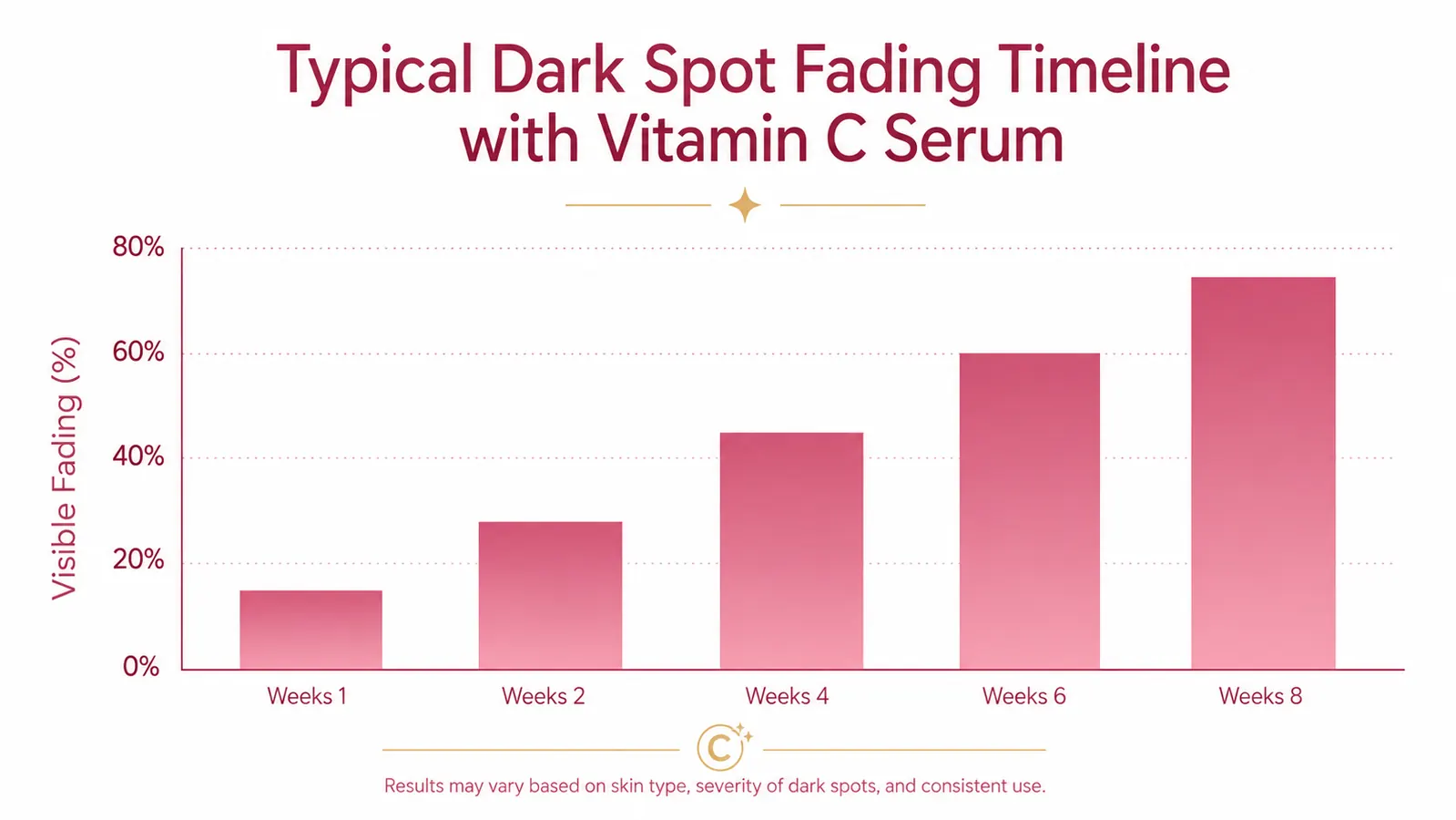
I've got a sun spot on my left cheekbone that showed up two summers ago and refused to budge no matter what moisturizer I tried. A few months of inconsistent random serums did nothing. I figured dark spots were just something you accepted. Then I actually learned how vitamin C works on hyperpigmentation, switched my routine, and watched that spot fade by about 60 percent over eight weeks. Not gone overnight. Not a miracle. But visibly, meaningfully lighter.
The problem is that most people who try vitamin C serum for dark spots give up in week two because they're doing it wrong. Wrong timing, wrong layering order, wrong amount, or they skipped the one step that makes the whole thing pointless without it. This guide walks you through exactly what to do, from the initial patch test through the full daily routine, based on what actually worked for me and what dermatologists consistently recommend. The recommended serum throughout is TruSkin Vitamin C Serum, which is what I personally use, but the routine steps work with any well-formulated vitamin C product.
If your dark spots haven't budged despite trying half a dozen products, this is the serum I'd start with.
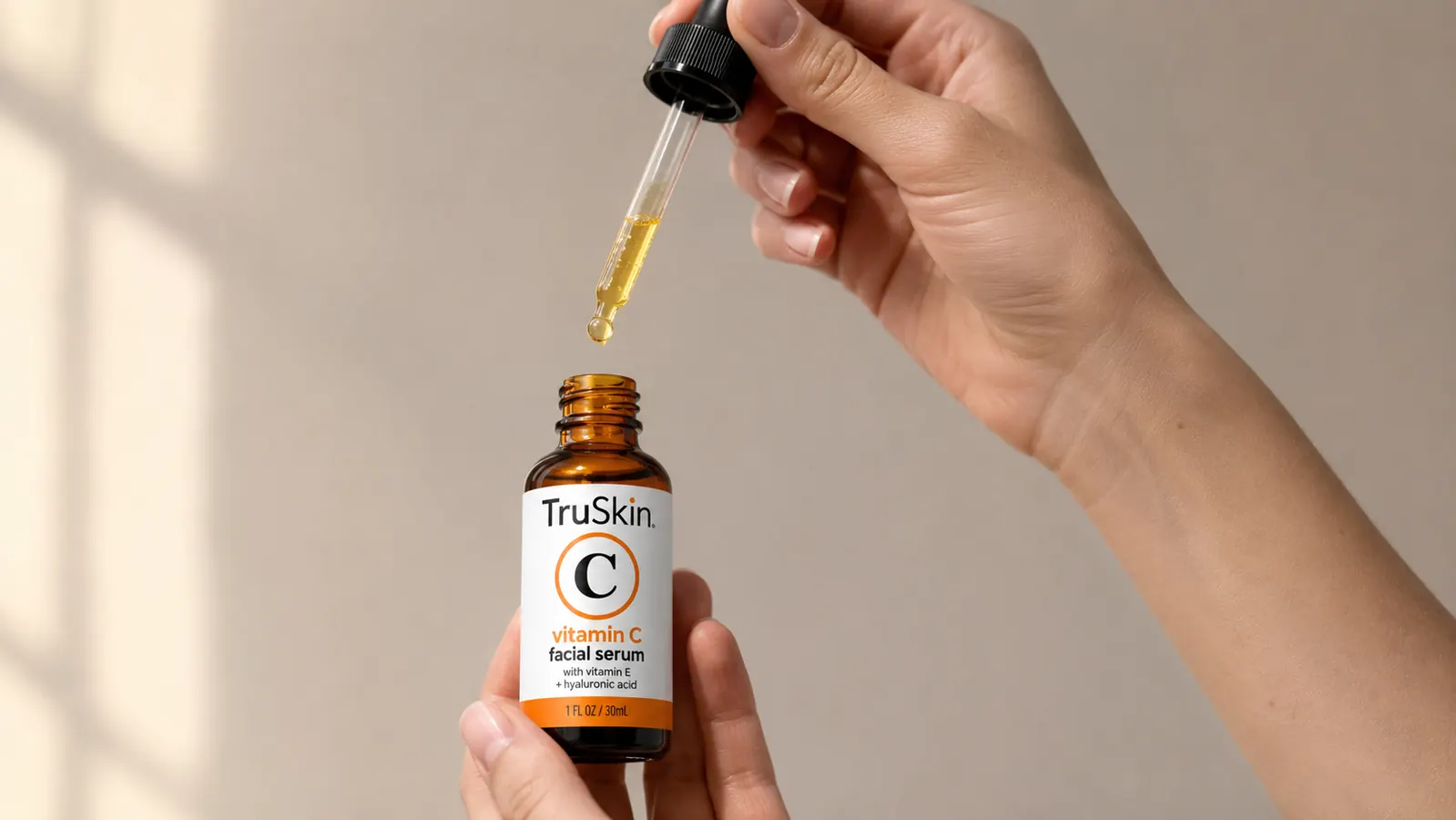
TruSkin Vitamin C Serum pairs L-ascorbic acid with hyaluronic acid and vitamin E in a stable, lightweight formula that works on post-acne marks, sun spots, and uneven tone. Over 155,000 Amazon reviewers. 4.4 stars. I've been using it for months.
Amazon Check Today's Price on Amazon →Step 1: Patch Test First, No Exceptions
Before you apply vitamin C to your face, do a patch test. This takes about 24 hours and can save you from a week of unnecessary irritation. Apply a small amount of the serum, maybe three drops, to the inside of your forearm. Leave it for 24 hours without washing that area. If you see no redness, itching, burning, or raised skin, you're clear to use it on your face.
This step matters more than most guides admit. Vitamin C serums, especially those built on L-ascorbic acid, are acidic by nature. That acidity is what makes them effective at interrupting melanin production, the process that creates dark spots. But it also means sensitive skin can react, especially in the first week or two. Knowing your skin can tolerate the formula before you commit to a full face application just makes sense.
If you do react to the patch test, don't write off vitamin C entirely. Some formulas are gentler than others. Serums that use sodium ascorbyl phosphate instead of L-ascorbic acid tend to be milder on reactive skin. TruSkin uses a stabilized vitamin C blend that most people tolerate well, but everyone's skin is different. Patch test every new product, full stop.
Step 2: Cleanse Properly Before You Apply
Vitamin C serum works best on clean skin. Applying it over sunscreen residue, overnight moisturizer, or face oil from the night before dilutes the active ingredient and reduces how well it absorbs. Every morning, before your serum step, wash your face with a gentle, non-stripping cleanser. Pat dry gently. Your skin should feel clean but not tight.
The reason the cleanse matters for dark spot fading specifically: vitamin C has to reach the melanocytes, the cells in your skin that produce pigment, to interrupt the overproduction that causes dark spots. If it's sitting on top of a layer of product residue, it can't do that job effectively. Think of it less like skincare and more like surface prep before painting. What's underneath determines how well the top layer performs.
One thing I learned the hard way: don't use an exfoliating cleanser right before applying vitamin C, especially in the beginning. AHAs and BHAs lower your skin's pH and can increase irritation when layered directly under an acidic serum. If you use a chemical exfoliant, do that step at night, not in the morning before your vitamin C.
Step 3: Apply Vitamin C Serum Correctly (Timing, Amount, and Technique)
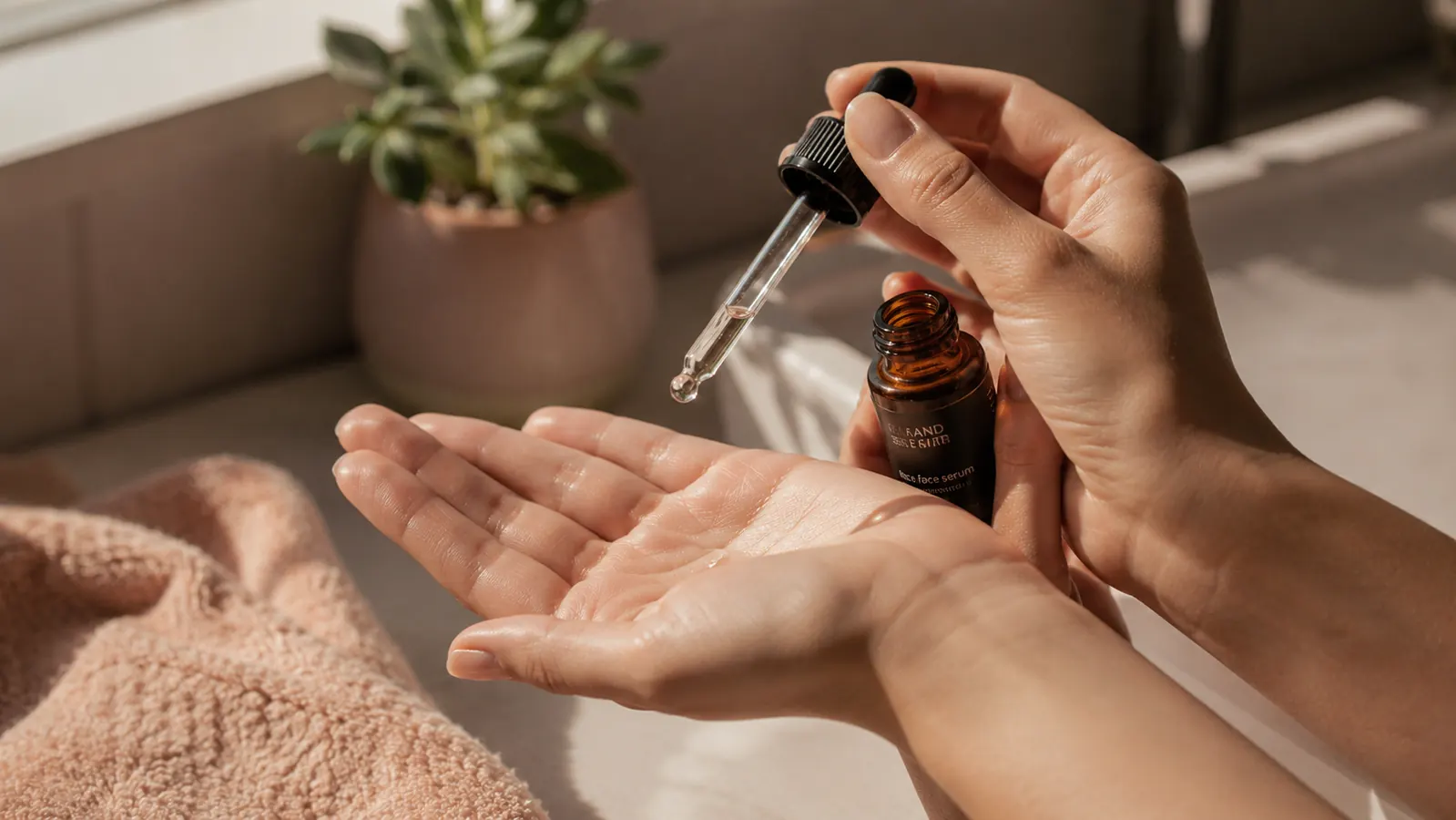
Apply your vitamin C serum to slightly damp skin, not soaking wet, not completely dry. A thin film of moisture on the surface helps the serum spread evenly and absorb faster. Dispense three to four drops into your palm, rub your palms together lightly, then press them onto your face. Don't drag or rub. Press, hold two seconds, release. Then use your fingertips to lightly tap any remaining serum into the skin around your nose, hairline, and jaw.
The amount matters. More does not mean faster results. Vitamin C is only effective up to a saturation point, and using excess serum mostly just wastes product. Three to four drops covers the full face and neck. If you're also targeting a specific dark spot, you can use one additional drop on that area and press it in directly after your full-face application.
Give the serum 60 to 90 seconds to absorb before moving to the next step. You'll notice a slight tackiness at first, which resolves as it dries. TruSkin's formula absorbs faster than most serums I've tried because it's a lighter viscosity. By the time I've brushed my teeth, it's ready for the next layer. Don't rush this step. The absorption window is where the active ingredient actually gets to work.
Step 4: Lock In Moisture and Never, Ever Skip SPF
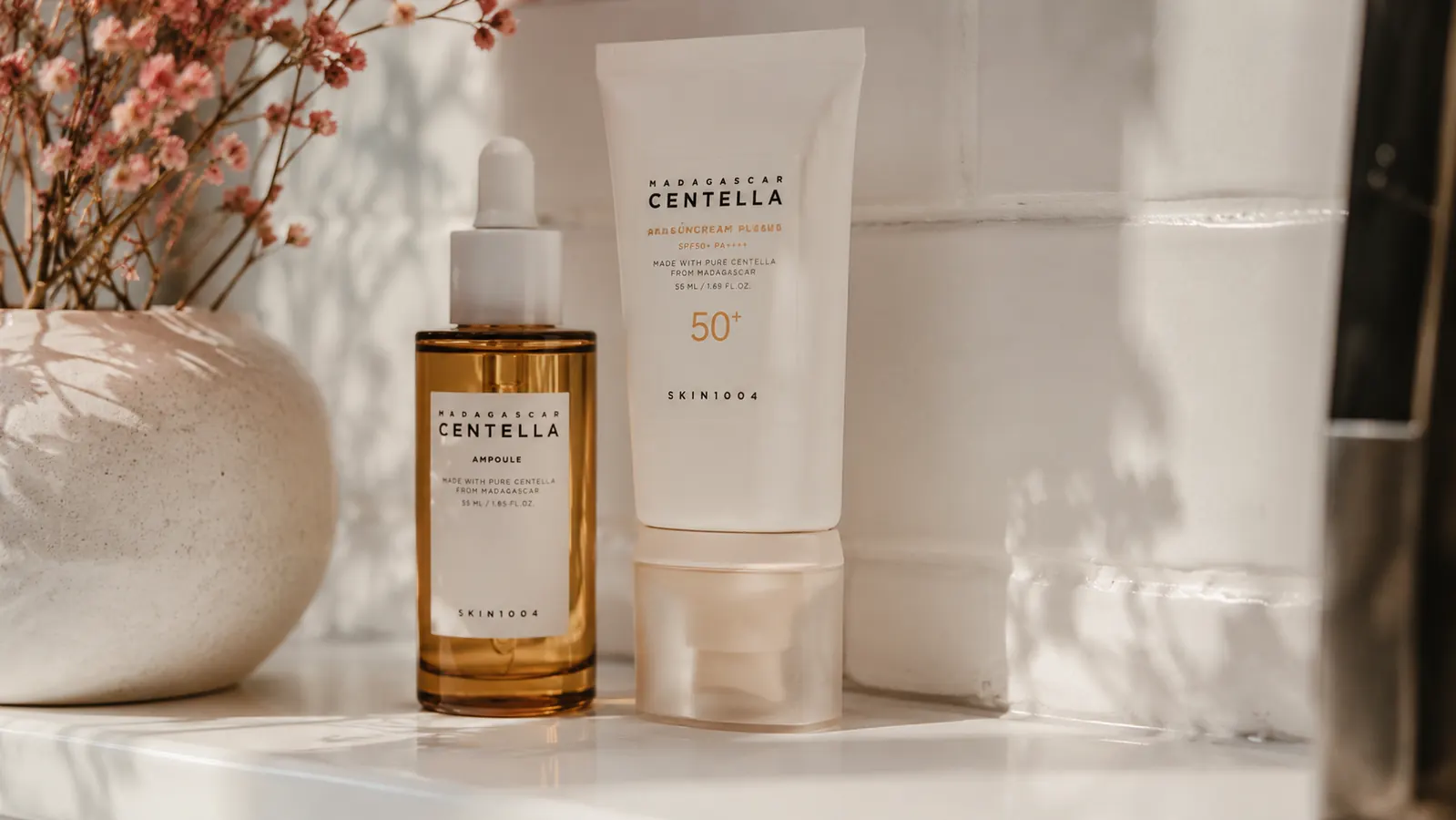
After your vitamin C serum absorbs, apply a lightweight moisturizer. This is not optional. Vitamin C, especially at concentrations above 10 percent, can be slightly drying for some skin types. A good moisturizer seals in the active ingredient, keeps the skin barrier intact, and prevents the tight or flaky feeling that makes people abandon routines in week two. For darker spot areas, gentle hydration also supports faster cell turnover, which is how pigment eventually fades.
Then comes the single most important step in this entire routine: sunscreen, SPF 30 or higher, every single morning. No exceptions, cloudy days included. Here's why this is non-negotiable for dark spot fading. UV exposure is the primary driver of melanin overproduction. If you apply vitamin C to inhibit pigment production but then go outside without SPF, you are undoing the work before it has a chance to accumulate. You're trying to empty a bucket while leaving the tap running. Dermatologists consistently say this: vitamin C and sunscreen together are far more effective than either one alone.
Vitamin C slows the pigment factory. Sunscreen turns off the switch. You need both, every morning, or you're just treading water.
I use a mineral SPF 30 over my moisturizer as the final step every morning. The exact sunscreen matters less than the habit. Find one you actually like using so you don't skip it. CeraVe's tinted mineral SPF is a solid option if you haven't found one yet. Apply it generously across your full face, including over any dark spot you're targeting. The whole point of this stack, serum plus moisturizer plus SPF, is that each layer supports the next.

Step 5: Stay Consistent and Set Realistic Expectations
Vitamin C is not a one-week fix. It's a slow, cumulative process. Most people with mild to moderate dark spots from sun damage or post-acne hyperpigmentation start seeing a visible difference at four to six weeks of consistent daily use. Deeper or older spots may take three to four months. The spots from my cheek that I mentioned at the start? They were noticeably lighter by week six and around 60 percent faded by week ten. One of them is almost invisible now. The other is still fading.
The reason consistency matters so much is how vitamin C works at the cellular level. It inhibits an enzyme called tyrosinase, which your skin uses to produce melanin. But skin cells are constantly cycling, which means new cells are always forming. Regular daily application keeps that inhibition active throughout the cycle. Skip three days and you're essentially resetting a portion of that progress. This is why building the serum into your morning routine, at the same point every day, is more important than any other single factor.
Photograph your skin in the same lighting once a week. Not once a day. Daily photos are discouraging because the changes are too small to see that frequently. Weekly photos in the same light, same angle, from the start of week one, are how you actually track real progress. I use my bathroom mirror with the overhead light on every Sunday morning. By week four I had my first clear photo comparison that showed a difference, and that's what kept me going.
What Else Helps
Vitamin C does most of the heavy lifting in this routine, but a few supporting habits can accelerate results. First, niacinamide is a good evening complement. It also inhibits melanin transfer within the skin and works via a different pathway than vitamin C, which means the two don't compete. Use niacinamide at night in your PM routine and vitamin C in the morning. Do not layer them at the same time of day, as some research suggests they can form a compound that temporarily reduces the effectiveness of both.
Second, gentle exfoliation once or twice a week speeds up cell turnover, which helps pigmented cells shed faster. A low-percentage glycolic acid toner (around 5 to 7 percent) used two evenings a week is plenty. More than that and you risk irritating a barrier that's already working hard. I added a glycolic acid step at the six-week mark and noticed the remaining spots continued to fade faster than they had in the first six weeks alone.
Third, don't pick at any active breakouts if you're dealing with post-acne marks. Post-inflammatory hyperpigmentation, the dark spots left after a pimple heals, is significantly worse when the original spot is manipulated. Every time you pick, you trigger more inflammation and more melanin response, creating a darker, longer-lasting mark. The vitamin C routine handles what's already there. Keeping your hands off active breakouts prevents new spots from forming.
Finally, store your vitamin C serum away from light and heat. L-ascorbic acid oxidizes when exposed to air and UV. An oxidized serum turns orange or brown and loses a significant portion of its effectiveness. TruSkin comes in a dark amber bottle that helps slow this process, but you should still keep it in a drawer or medicine cabinet, not on a sunny windowsill. If the serum turns dark orange and smells slightly off, it's past its prime. Replace it.
If you want a deeper look at why vitamin C earns its place in a dark spot routine, I wrote a companion piece covering the ten science-backed reasons this ingredient actually works. And if you're deciding between TruSkin and a competing brand before committing, the full 90-day review of TruSkin covers everything from texture and scent to the exact week-by-week results I logged. Both are worth a read before you buy.
Ready to start fading dark spots? Here's the serum that fits this exact routine.
TruSkin Vitamin C Serum with hyaluronic acid and vitamin E. Stable formula, lightweight texture, no oxidized-orange smell. If you follow this five-step routine consistently for six to eight weeks, you'll see why over 155,000 people keep repurchasing it.
Amazon Check Today's Price on Amazon →