
I want to give you the short answer first, because I know you have better things to do than scroll through 2,000 words before finding out which one wins. TruSkin Vitamin C Serum is the better buy for most people, and it is not particularly close when it comes to visible brightening. I tested both serums on my own skin for six weeks, alternating sides of my face for the first two weeks and then committing fully to TruSkin for the remaining four. The difference in my sun spots and overall evenness was noticeable by week four. If you want the science and the tradeoffs, keep reading. If you are ready to just grab the winner, the link below takes you straight there.
A quick note before we go further: always patch-test a new vitamin C serum on the inside of your wrist for 24 to 48 hours before applying it to your face, especially if your skin runs sensitive. Vitamin C at higher concentrations can cause temporary redness or tingling on reactive skin. That said, both of these serums sit in the mild-to-moderate range in terms of L-ascorbic acid concentration, so most people tolerate them fine.
| TruSkin Vitamin C Serum | CeraVe Vitamin C Serum | |
|---|---|---|
| Vitamin C Form | L-Ascorbic Acid (most potent, fast-acting) | 3-O-Ethyl Ascorbic Acid (more stable, slower to show) |
| Estimated Vitamin C Concentration | ~15-20% (industry estimate based on formula position) | ~10% (brand-stated) |
| Supporting Actives | Vitamin E, Hyaluronic Acid, Botanical Blend (Aloe, Jojoba, MSM) | Niacinamide, Hyaluronic Acid, Ceramides |
| Texture | Lightweight watery serum, absorbs quickly, slight citrus scent | Light lotion-serum hybrid, slightly thicker, fragrance-free |
| Skin Types Best Suited For | Normal, oily, combination, and most dry skin types | Dry, sensitive, and reactive skin types |
| Brightening Timeline | Visible tone improvement in 3-4 weeks for most users | Subtle improvement over 6-8 weeks, gradual |
| Amazon Rating | 4.4 stars (155,000+ reviews) | 4.3 stars (40,000+ reviews) |
| Current Price Range | Budget-friendly for 1 fl oz | Budget-friendly for 1 fl oz |
| Best For | Sun spots, uneven tone, dullness, anti-aging support | Barrier repair, gentle brightening, sensitive or compromised skin |
Your skin is dull right now. TruSkin's L-ascorbic acid formula starts working in weeks, not months.
Over 155,000 Amazon customers and a 4.4-star rating back this up. Check the current price and grab the size that fits your routine.
Amazon Check Today's Price on Amazon →Where TruSkin Wins
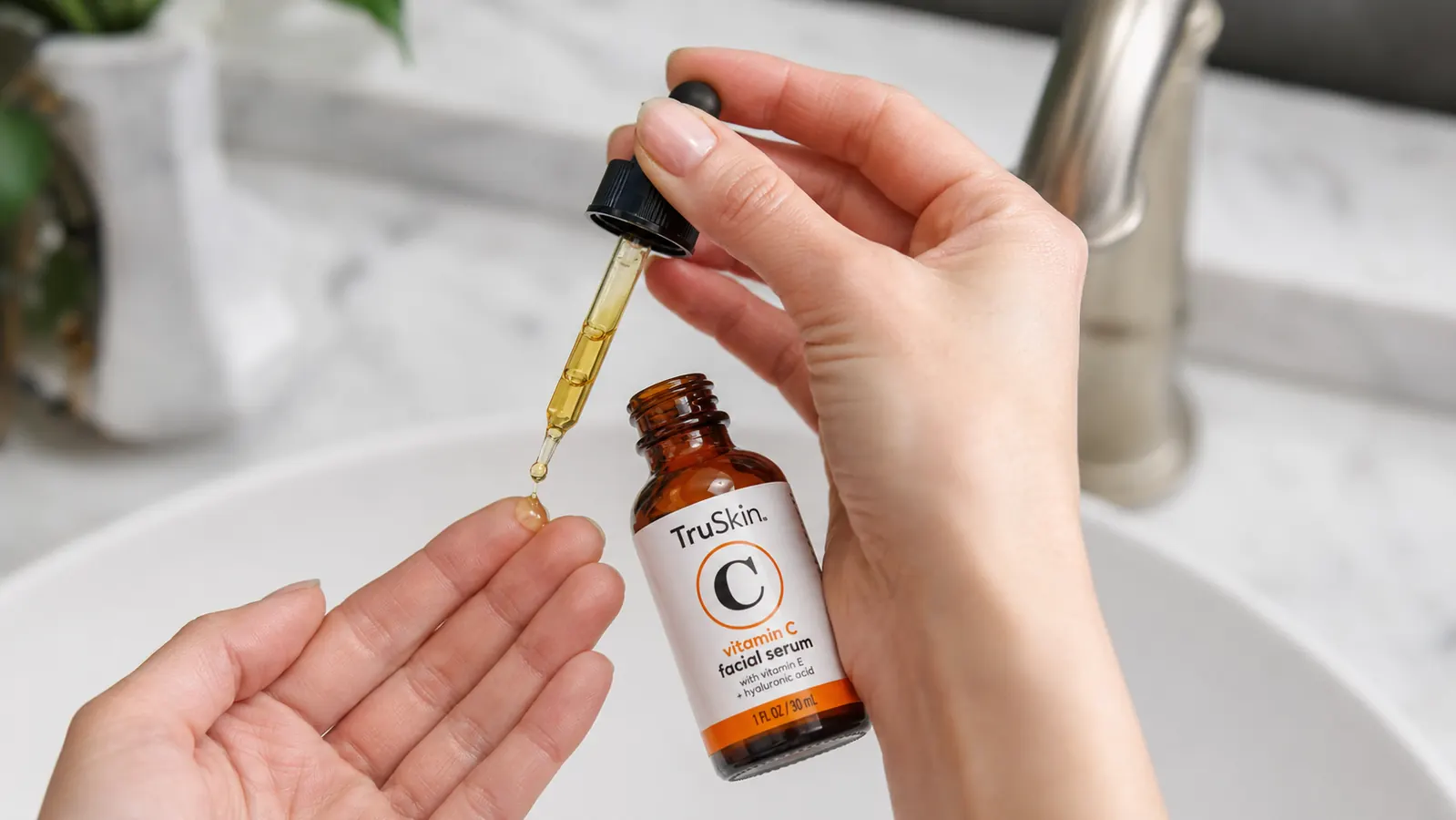
The biggest advantage TruSkin has is the form of vitamin C it uses. L-ascorbic acid is the biologically active form that your skin can actually put to work immediately. It interrupts melanin production at the source, which is what physically fades existing dark spots and prevents new ones from forming when you pair it with SPF in the morning. Most dermatologists, when recommending a vitamin C serum for hyperpigmentation, specifically mention L-ascorbic acid rather than the ester derivatives. TruSkin leads with this ingredient and supports it with vitamin E, which stabilizes the ascorbic acid and boosts its antioxidant effect, and hyaluronic acid for a moisture assist. That combination is the classic vitamin C delivery stack for a reason.
In my own six-week test, the sun spots on my left cheekbone and one persistent mark on my right temple both faded measurably. I am talking about spots that had been sitting there stubbornly since a particularly bad summer three years ago. By week four I stopped bothering to cover them with anything. The texture of my skin also smoothed out in a way I noticed mostly in how my moisturizer sat on top of it, it just seemed to absorb more evenly. I apply it every morning after cleansing and toning, let it sit for about 90 seconds, then layer my moisturizer on top. That timing window matters because L-ascorbic acid works at a low skin pH, so you want to let it do its thing before you bring in anything alkaline.
By week four, the spots I had been covering up for three years stopped needing coverage. I was not expecting TruSkin to actually do that.
Where CeraVe Vitamin C Serum Wins
CeraVe's entry uses 3-O-Ethyl Ascorbic Acid, which is a stabilized ester form of vitamin C. It does not oxidize as fast as L-ascorbic acid, meaning the formula has a longer shelf life and is less likely to turn yellow and degraded in your cabinet. For people who buy skincare and then use it inconsistently, that stability advantage is real. The formula also adds niacinamide and ceramides, which puts it in different territory from TruSkin. If your skin barrier is compromised, if you are dealing with redness, dehydration, or post-acne dryness alongside your tone concerns, CeraVe's formula addresses more problems at once. It is fragrance-free, which matters for anyone who has reacted badly to scented serums.
The tradeoff is that 3-O-Ethyl Ascorbic Acid simply does not deliver the same punch on dark spots and dullness in the same timeframe. During my two weeks alternating sides of my face, the CeraVe side felt hydrated and soothed but showed no visible spot improvement. My skin looked healthy, not brightened. That is a meaningful distinction. If brightening is the primary goal, you need the active form of vitamin C, not the stabilized derivative. CeraVe's vitamin C serum is more accurately described as a ceramide-plus-vitamin-C maintenance product than a targeted brightening treatment.
If brightening is your goal, stop waiting. TruSkin's formula actually gets after dark spots.
More than 155,000 reviews and a 4.4-star average make this one of the most tested vitamin C serums on Amazon. See today's price.
Amazon Check Today's Price on Amazon →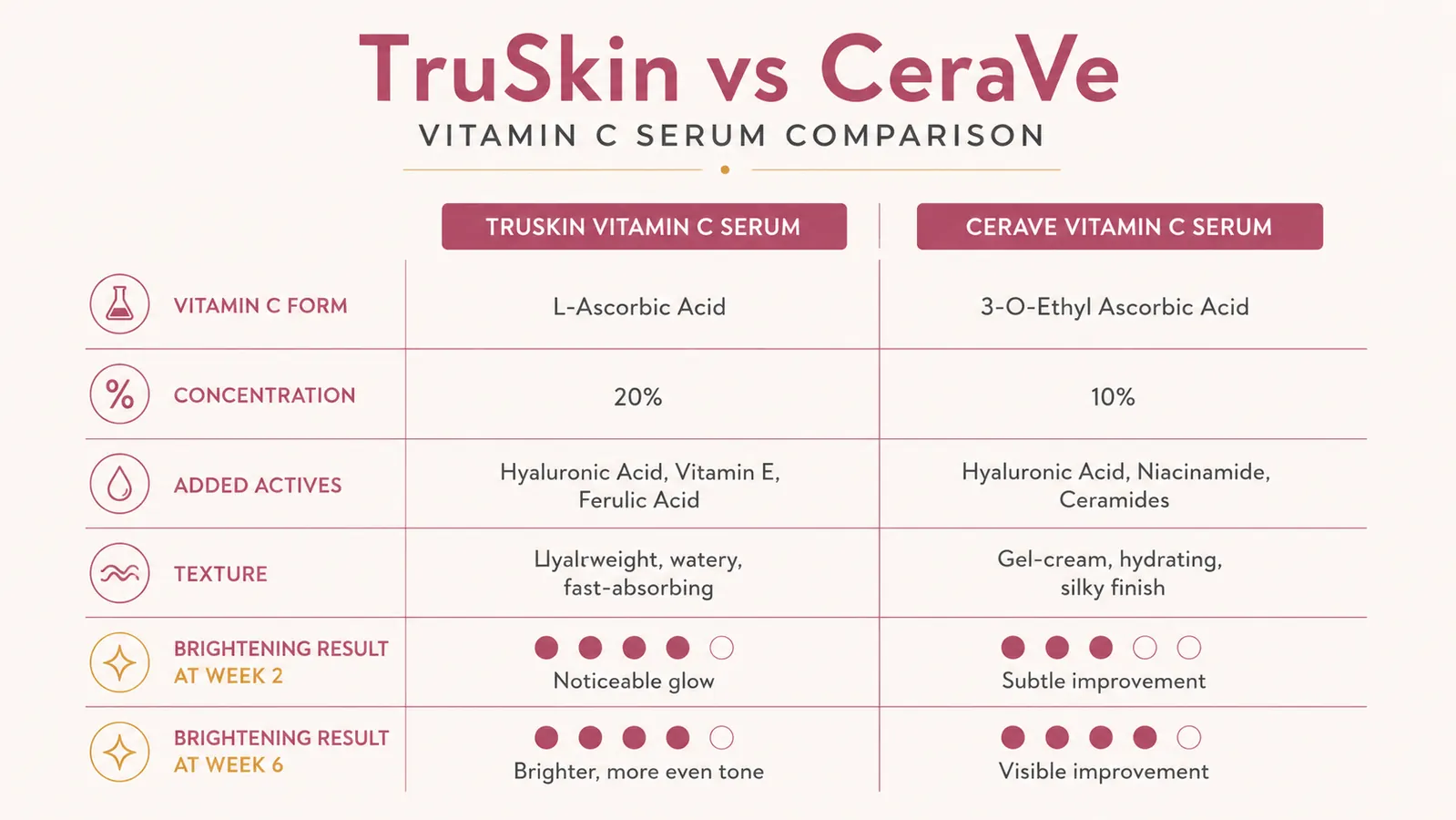
Formula Deep-Dive: Why the Form of Vitamin C Matters So Much
This is the part that gets glossed over in most serum comparisons, so I want to spend a minute on it because it directly explains the performance gap. L-ascorbic acid is pH-dependent. It needs to penetrate skin at a pH below 3.5 to work effectively. That is why properly formulated L-ascorbic acid serums often have a slightly acidic, almost citrusy feel when you apply them. TruSkin has that quality. The slight tingling I felt in the first week, which faded once my skin adapted, was actually a sign the formula was doing what it is supposed to do.
3-O-Ethyl Ascorbic Acid does not have those pH constraints. It is gentler and more shelf-stable, but it has to be converted to L-ascorbic acid inside the skin after absorption, and that conversion is incomplete and slow. Research on the conversion rate varies, but the practical result is that you need more time and more consistent application to see the same outcome. For a teenager using vitamin C as a general antioxidant precaution, that is probably fine. For someone with specific hyperpigmentation concerns or visible dullness at 35-plus, it is a significant limitation.
Smell, Texture, and the Daily Experience
I will not pretend TruSkin has zero quirks. It has a faint citrus-botanical smell that I find pleasant enough, but if you are scent-sensitive you will notice it. The bottle delivers the serum through a pump, and you really only need two to three pumps for your full face. It absorbs fast, leaves no stickiness, and layers cleanly under a heavier moisturizer or SPF. I have never had it pill under sunscreen, which is a common complaint with water-heavy serums. On oily or combination skin it sits very comfortably. On drier skin you may want to add your moisturizer within about 60 seconds, before the surface starts to feel tight.
CeraVe's serum is noticeably thicker, closer to a gel-cream than a true watery serum. For dry skin types, that texture is actually a plus. It layers beautifully under SPF and does not emphasize any dry patches. The fragrance-free formulation is a real differentiator for reactive skin. The pump dispenses a similar amount and the product feels elegant in the hand. Day-to-day, CeraVe is the more comfortable experience for dry or reactive skin types. TruSkin wins on results, CeraVe wins on comfort for that specific subset of users.
Who Should Buy Which
Buy TruSkin Vitamin C Serum if brightening dark spots, fading sun damage, or evening out skin tone is your primary reason for adding a vitamin C serum to your routine. It also wins if your skin is normal, oily, or combination and you want visible results in four to six weeks rather than gradual improvement over months. The 155,000-plus reviews on Amazon are not random. A serum earns that kind of review volume by working for a wide range of people, and in my own testing it delivered. For a deeper look at my full experience over 90 days, check out my long-term TruSkin review.
Choose the CeraVe Vitamin C Serum if your skin is dry, compromised, or reactive and you want the brightening benefit layered into a ceramide-rich formula that also repairs your skin barrier. It is a better fit if you have previously reacted to scented serums or if your skin tends toward sensitivity and you want to ease into vitamin C with a gentler entry point. Just set realistic expectations about timeline. You will not see dramatic spot-fading in four weeks. Think of it as a long-game product rather than a targeted corrector. It is also worth considering if stability is a concern because you tend to use skincare products slowly over many months.
Skincare Caveats Worth Knowing
A few things I always remind people about when they are starting or switching a vitamin C serum. First, vitamin C serums oxidize. An orange or brown color means the L-ascorbic acid has degraded and the product is past its useful life. Store it away from direct sunlight and heat. A bathroom shelf by a window is not ideal. Second, vitamin C is a morning ingredient because its antioxidant function pairs with your daily UV exposure protection. Always follow it with SPF. Without sunscreen, you are leaving a lot of the spot-fading benefit on the table because you are letting UV radiation re-trigger the melanin production the vitamin C is trying to interrupt. Third, if you are using a retinol at night, that is a compatible routine with either of these serums. Vitamin C in the morning, retinol at night is a well-established regimen. Do not use both in the same application step.
Finally, realistic timelines matter. No vitamin C serum is going to erase a decade of sun damage in a month. The best ones visibly reduce spots and dull tone in four to eight weeks with consistent daily use. TruSkin gets you there faster than CeraVe in my experience, but neither one is a substitute for consistent SPF use or a dermatologist visit if your hyperpigmentation is deep or widespread. If you want to dig into the honest tradeoffs and caveats beyond just what this comparison covers, my honest review of TruSkin goes further into who should skip it entirely.
Ready to actually see a difference? TruSkin is the vitamin C serum I reach for every single morning.
4.4 stars, 155,000 reviews, and results you can see in the mirror by week four. Check today's price on Amazon before it moves.
Amazon Check Today's Price on Amazon →