
Let me tell you something that 155,000 Amazon reviews mostly skip over: TruSkin Vitamin C Serum does not smell like nothing. It does not feel weightless. And if you open the bottle and leave it on your bathroom counter for three weeks, it will turn from pale yellow to an orange-brown shade that looks a little alarming the first time you see it. None of that makes it a bad serum. But it is information you deserve before you add it to your cart.
I am Tim, and I have been testing skincare on myself for a few years now. I run this site to give you the honest picture, not the curated highlight reel. TruSkin Vitamin C Serum (ASIN B01M4MCUAF) is arguably the most popular vitamin C serum on Amazon. I spent six weeks with it, used it every morning on freshly washed skin, and paid attention to things most reviewers ignore: the texture on humid days, the smell on a morning commute, the color change as the bottle aged, and the two mornings I broke out in small bumps around my jawline. Here is what I actually found.
The Quick Verdict
A solid, affordable vitamin C serum that works for most normal-to-dry skin types. Smell and oxidation will bother some people more than others, and sensitive skin needs to patch-test seriously.
Amazon Check Today's Price →If your skin gets along with it, it's hard to beat at this price
TruSkin Vitamin C Serum has more real-world testing behind it than almost any other option in this price range. Check the current Amazon price before you decide.
Amazon Check Today's Price on Amazon →What Nobody Tells You About the Smell
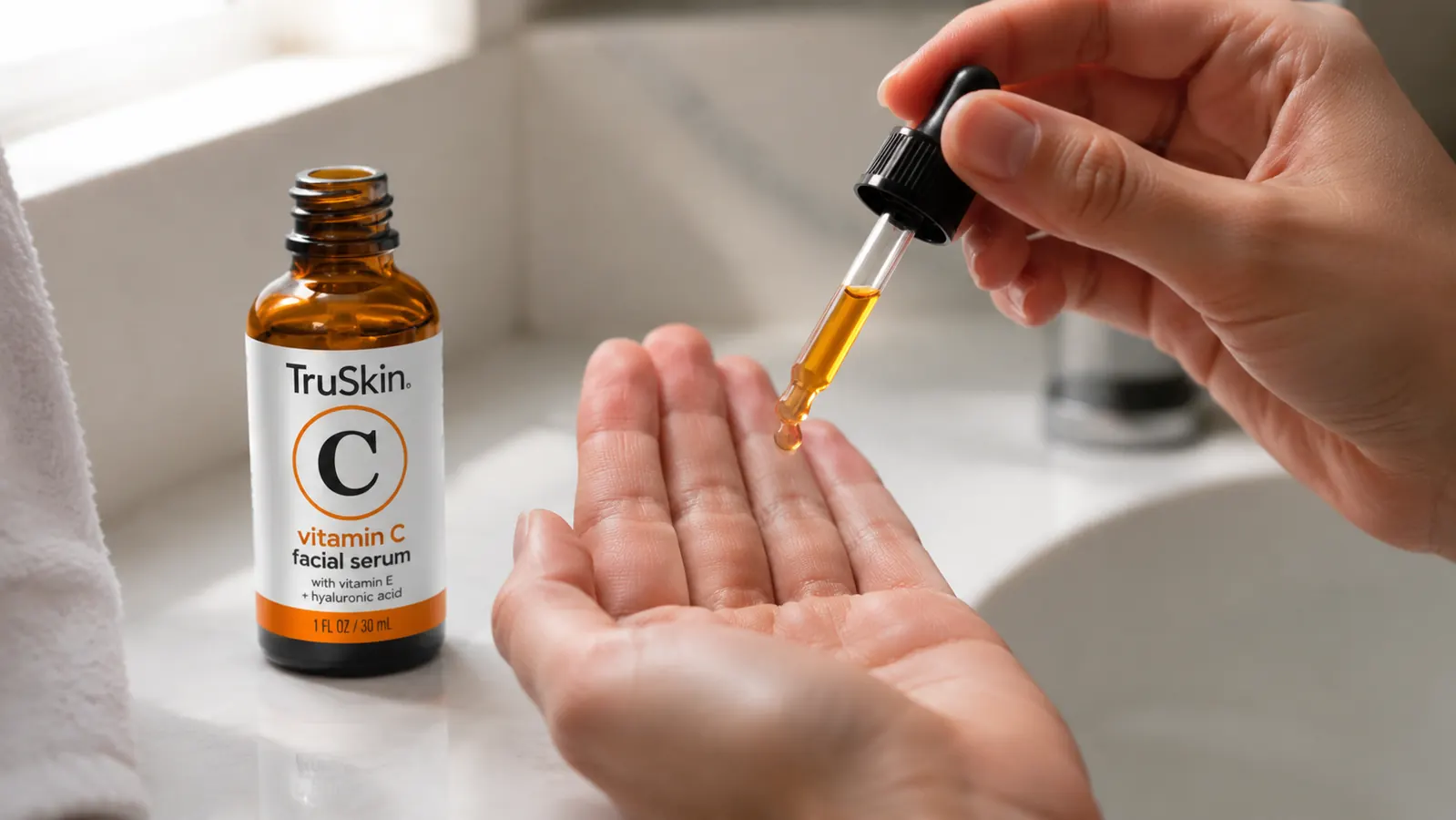
The formula contains L-ascorbic acid (vitamin C), hyaluronic acid, vitamin E, and aloe vera. It also contains witch hazel, botanical extracts, and a combination of preservatives. Some of those ingredients, particularly the combination of vitamin C and botanical extracts, produce a scent. TruSkin describes the product as lightly scented. My honest read: it smells faintly sulfurous, like a hard-boiled egg left a little too long, with a faint herbal undertone on top of that. It is not strong. It dissipates within about two minutes of application. But if you have a sensitive nose, or if you are applying this while your partner is trying to sleep in the same room, you will notice it.
I tested it side-by-side with a straight-up L-ascorbic acid serum that has no botanicals, and the sulfurous note is mostly absent from the plain formula. The smell in TruSkin comes from the ingredient mix, not from a product gone bad. This is worth knowing because the instinct when you smell something odd in a serum is to throw it out immediately. If TruSkin smells faintly like this when you first open it, that is completely normal. If it smells strongly like vinegar or fully rotten eggs after sitting open for six weeks, that is oxidation telling you to replace it.
The Oxidation Timeline You Should Actually Know
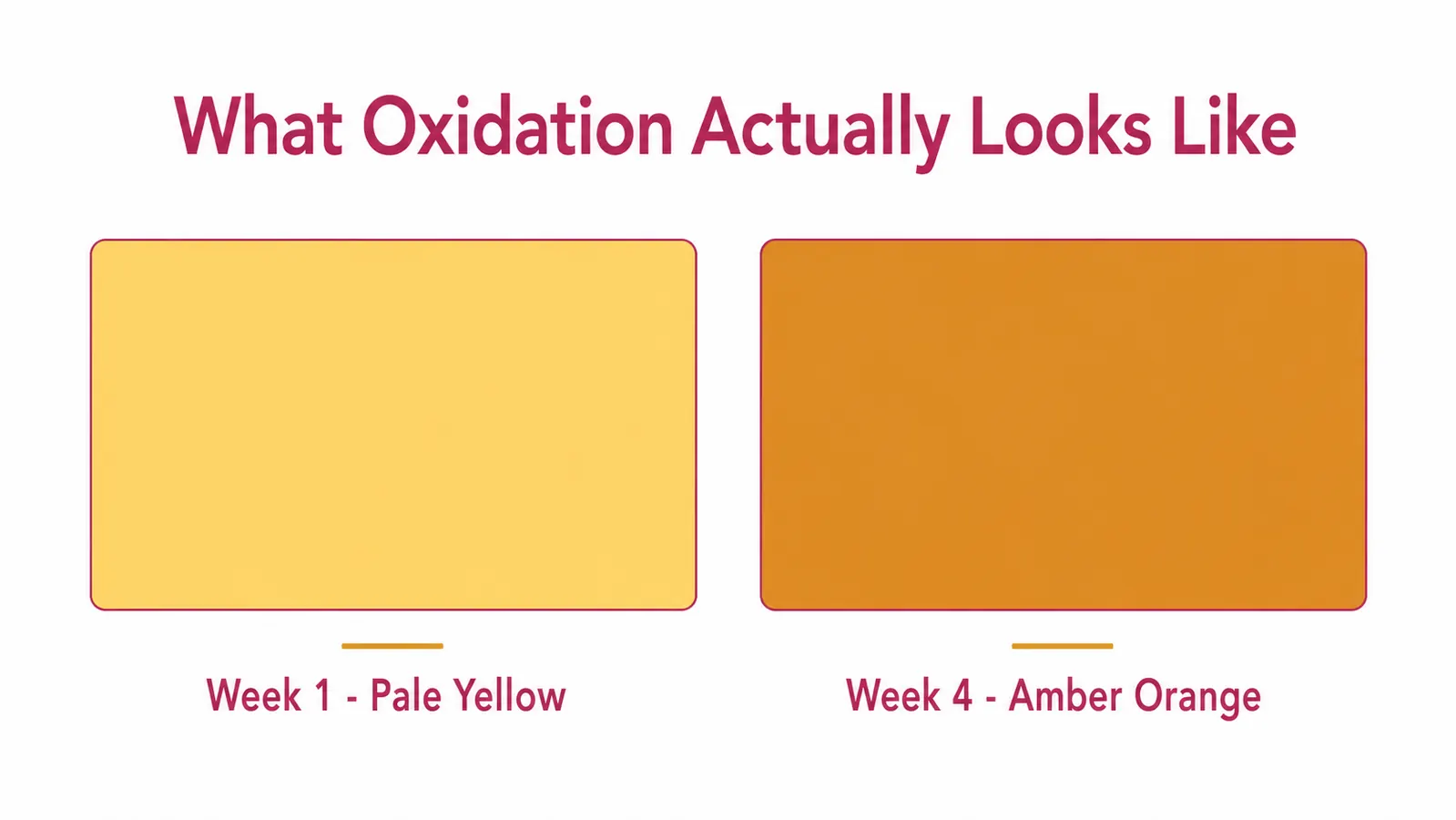
Vitamin C is unstable. Every vitamin C serum oxidizes over time, TruSkin included. The color of the serum tells you where you are in that process. Freshly opened, TruSkin is a pale golden yellow. By week two or three of daily use, most people will see it shift to a warmer amber. By six weeks, especially if the bottle has been exposed to light or warm bathroom temperatures, it moves into orange-brown territory. This is called oxidized ascorbic acid, and an oxidized serum delivers significantly less brightening and antioxidant benefit than a fresh one.
TruSkin's 1-ounce bottle holds about 60 daily uses at the recommended 3-4 drops per application. If you use it every morning and store it correctly (away from direct light, cap fully on, cool dry location), you should finish it before it becomes heavily oxidized. The problem comes when you use it inconsistently, skip days, or leave the cap off between uses. I noticed a measurable color shift in my bottle after about 25 days, at which point I moved it into a drawer to slow things down. My practical recommendation: never leave it on the bathroom counter in a spot that gets direct sunlight through a window, and if you are the kind of person who buys skincare and uses it three times a week, this particular product will oxidize before you finish it.
A vitamin C serum that sits on your counter half-used for two months is not doing your skin any favors. Consistency and storage matter as much as the formula itself.
The Texture: Sticky or Not, Depending on Your Skin
TruSkin is a water-based serum with a slightly thicker consistency than a pure water-thin L-ascorbic acid formula. On my combination skin, it felt fine on most mornings: applied in a thin layer, patted in, and absorbed within about 90 seconds. I layered moisturizer on top without issue. On two particularly humid mornings when my skin was already producing more oil than usual, the serum sat on top of my skin longer and created a faint tackiness that lingered under sunscreen. It was not uncomfortable, but it was noticeable enough that I thought about it during the day.
The texture comes from the aloe vera gel base. For dry and normal skin types, that gel base is actually a benefit because it adds a light layer of hydration alongside the vitamin C, which means one fewer product in your stack. For oily or combination skin on humid days, it can feel like one step too many between cleansing and sunscreen. If you have oily skin and you layer this under SPF, give it a full two minutes to absorb before applying the next product. That extra wait made the difference for me on the mornings it felt heavy.
What It Actually Did for My Skin Over Six Weeks
I want to be specific here rather than vague. By week three, the area around my temples, where I carry some sun-related dullness from years of not wearing SPF consistently, looked noticeably more even in the morning before I put anything else on. My overall skin tone looked brighter in natural light. A post-acne dark spot on my left cheek that has been around for about eight months faded enough that I stopped reflexively touching concealer to it every morning. That is meaningful progress for six weeks, and I think the combination of L-ascorbic acid plus vitamin E is genuinely doing the work there.
What did not change: deeper hyperpigmentation around my nose from an old hormonal patch of melasma. That area requires a stronger approach than a vitamin C serum at this concentration (the exact percentage is not disclosed by TruSkin, though it is estimated at around 15-20% based on ingredient list position). Fine lines also saw no meaningful change over six weeks, which is realistic. Collagen support from vitamin C is a longer-term game, measured in months and years, not weeks.
I also want to be honest about the two mornings I broke out in small closed comedones along my jawline during week two. I cannot pin this exclusively on the serum because I was rotating a new face wash during the same period. When I went back to my usual cleanser, the breakout cleared within five days. But if you are switching multiple products at the same time, you will not know which one caused a reaction, and starting one new product at a time is always the smarter approach.
The Ingredient List: What's Earning Its Keep and What's Along for the Ride
The active heroes in this formula are three: L-ascorbic acid for brightening and antioxidant protection, vitamin E for skin barrier support and boosting C's stability, and hyaluronic acid for hydration. That combination has genuinely solid dermatological backing. Studies consistently show that vitamin C and E together are more stable and more effective than C alone. The hyaluronic acid gives the formula a hydrating quality that straight L-ascorbic acid serums typically skip. For someone who wants brightening plus basic moisture in one step, the formula logic holds.
The supporting cast of botanical extracts, including green tea, orange, and gotu kola, adds antioxidant marketing claims but minimal proven skin-change impact at the concentrations used in a product at this price point. They are not harmful. They just are not why this serum works. The witch hazel in the formula is worth flagging specifically for people with rosacea or reactive skin: it is a recognized trigger ingredient for those skin types. If your skin flushes easily or runs hot and reactive, patch test this on your inner arm for three to four days before putting it anywhere near your face.
What I Liked
- Vitamin C plus E plus hyaluronic acid is a genuinely effective combination, backed by dermatology research
- Noticeably improved skin tone and post-acne dark spot fading within four to six weeks for most users
- Affordable compared to higher-end vitamin C serums with similar active concentrations
- Formula absorbs without residue on most skin types when applied correctly and allowed to fully dry
- 155,000-plus Amazon reviews provide a large real-world dataset of how different skin types respond
Where It Falls Short
- Distinct sulfurous herbal scent on application that bothers some users, particularly in enclosed spaces
- Oxidizes visibly within three to four weeks if stored in light or used inconsistently
- Witch hazel in the formula is a potential irritant for rosacea-prone and reactive skin types
- Vitamin C concentration is not disclosed on packaging, making direct comparison to clinical-grade formulas difficult
- Slightly tacky finish on oily or combination skin in humid weather if not given enough absorption time
How to Get the Most Out of It (If You Decide to Try It)
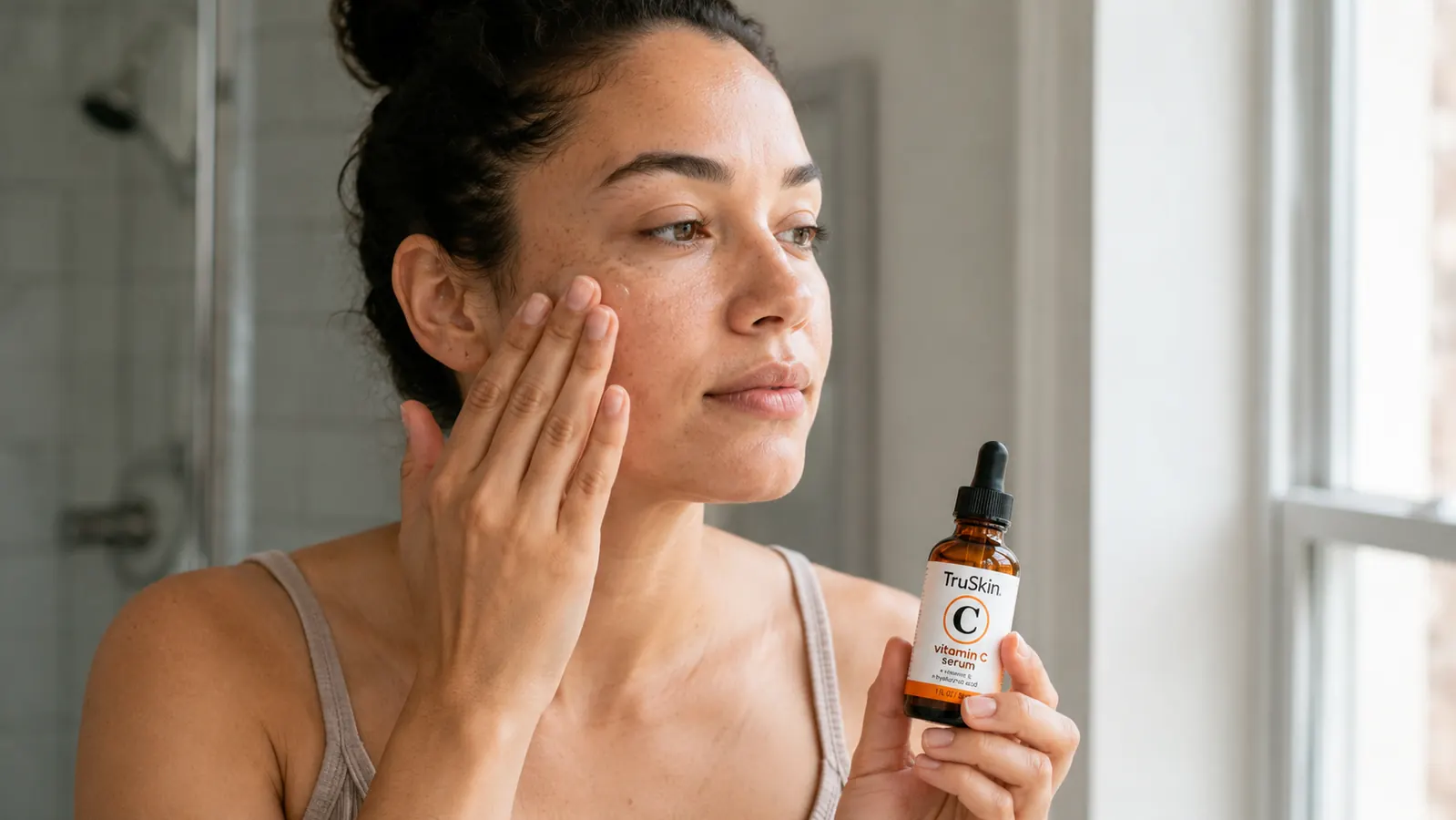
A few things I learned over six weeks that most Amazon reviewers will not tell you. Use it on completely dry skin, not damp. I tried applying it immediately after washing my face while my skin was still slightly moist, and the serum felt thinner and less effective. When applied to dry skin, the concentration stays where you put it. Apply 3-4 drops, warm them slightly between your fingertips, and pat gently rather than rubbing. Rubbing moves the serum around instead of letting it absorb into one spot. Let it sit for at least 90 seconds before layering anything on top.
Store the bottle in a drawer or medicine cabinet, not on a decorative shelf. Keep the cap fully seated after every use. If you want to extend the life of the serum and slow oxidation, store it in the refrigerator. The cool temperature slows the chemical degradation of the ascorbic acid meaningfully, and applying a cool serum in the morning is not the discomfort you might expect. It actually wakes you up faster than coffee. If you want to go deeper on technique, my full guide to fading dark spots with vitamin C serum covers the full morning routine step by step.
How This Compares to Other Options
The most common alternative that comes up in comparisons is CeraVe Vitamin C Serum. CeraVe uses a more stable vitamin C derivative (ascorbyl glucoside) rather than pure L-ascorbic acid. The trade-off: ascorbyl glucoside is gentler and more stable, but it has to convert to active vitamin C after absorption, which means it works more slowly and often less dramatically on visible dullness. For someone with reactive or sensitive skin, the CeraVe formula is probably worth the lower irritation risk. For someone who wants faster visible brightening and can tolerate direct L-ascorbic acid, TruSkin delivers more visibly and more quickly. I do a full side-by-side of both in my TruSkin vs CeraVe vitamin C comparison if you want to see the differences broken down by skin type.
At the higher end, formulas like SkinCeuticals C E Ferulic use L-ascorbic acid at a disclosed 15% concentration with ferulic acid added for additional stability and potency. The formula is genuinely more stable, better packaged, and backed by more clinical research. The cost is also roughly eight times higher. Whether that gap is worth it depends entirely on your budget and how serious your skin concerns are. For the majority of people who are trying vitamin C for the first time and want a real-world test before investing more, TruSkin is a reasonable, low-risk starting point.

Who This Is For
TruSkin Vitamin C Serum is a strong fit for people with normal, dry, or slightly combination skin who want their first or second real vitamin C experience. It works best when you have post-acne dark spots or general sun-related dullness that has built up over years, when you can commit to daily morning use rather than occasional use, and when you are willing to store the bottle correctly to slow oxidation. It is also a genuinely good option for anyone who has been spending money on moisturizers and sunscreen but has never added an active brightening step to their morning routine. At this price, even a modest visible improvement in skin tone delivers a real return, and most consistent users report exactly that.
Who Should Skip It
I would steer three groups away from this specific serum. First, people with rosacea, perioral dermatitis, or reactive skin that flushes at minor provocation. The witch hazel and the L-ascorbic acid concentration are both potential triggers, and the stakes of a flare-up are too high to experiment. A gentler vitamin C derivative (ascorbyl glucoside or sodium ascorbyl phosphate) is a smarter starting point for reactive skin. Second, people who are genuinely inconsistent with their routines. If you apply something three times one week and skip the next two weeks entirely, a vitamin C serum at this price will oxidize before you see meaningful benefit, and you will have wasted your money on a bottle that turns orange in your cabinet. This serum rewards discipline. Third, people targeting deep or hormonally-driven hyperpigmentation such as melasma. Vitamin C alone is not potent enough for that category of pigmentation. That conversation belongs with a dermatologist, and the treatment likely involves tretinoin or a prescribed combination approach.
Six weeks of daily use, honest caveats included: still worth trying for the right person
If you have normal to dry skin, some post-acne marks, and you will actually use this every morning, TruSkin Vitamin C Serum is one of the better-tested affordable options you can start with today. See today's price on Amazon.
Amazon Check Today's Price on Amazon →