
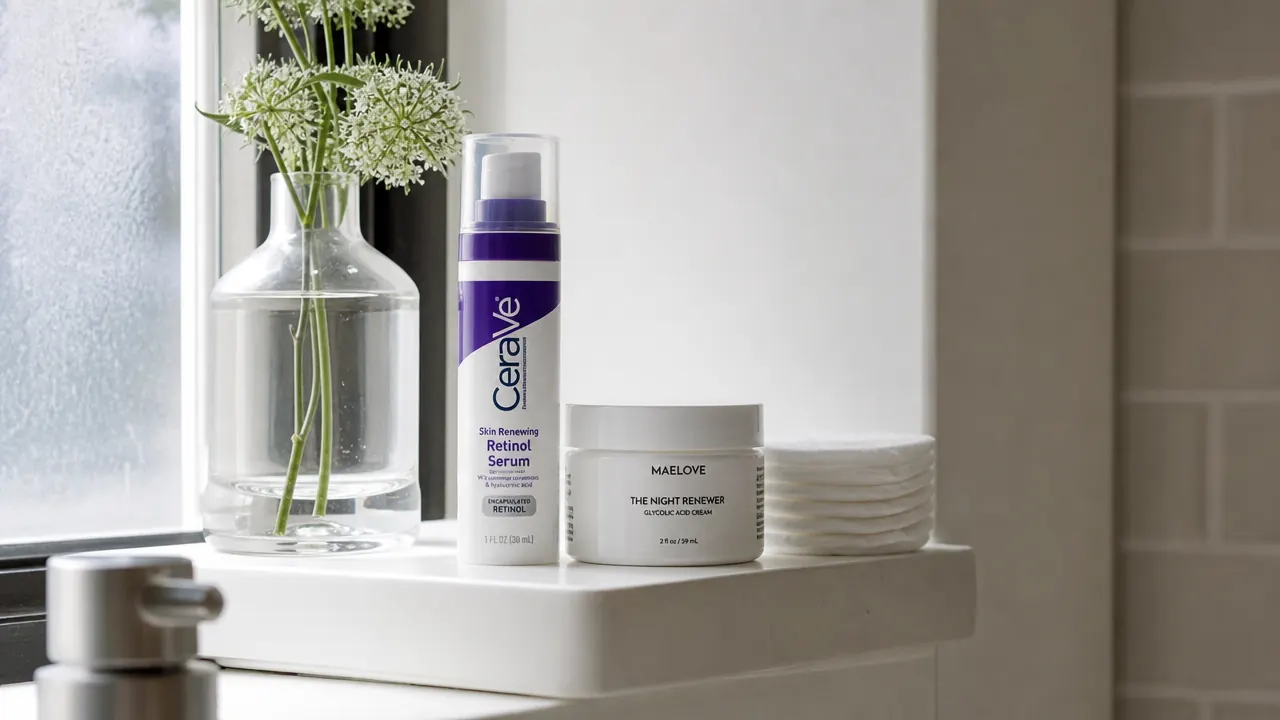
Here is the thing nobody mentions in those tidy five-star reviews: encapsulated retinol is designed to be slow. That is the whole point. The polymer shell delays delivery so your skin does not freak out the way it might with a standard retinol formula. That is a real benefit. But if you buy the CeraVe Retinol Serum expecting to see meaningful changes in four weeks, you are going to feel let down, not because the product is bad, but because you walked in with the wrong timeline.
I tested this serum nightly for ten weeks, starting in February. I am 38, combination skin with some forehead lines and uneven texture from years of inconsistent sun protection. No serious skin conditions. I have used standard retinol before at 0.25% and 0.5% concentrations, so I have a reference point. What I wanted to know: does CeraVe's encapsulation technology actually change the experience and the outcome, or is it just a comfort feature for people who are nervous about irritation?
The Quick Verdict
A genuinely well-formulated, low-irritation retinol serum that earns its keep for sensitive or first-time retinol users. Experienced retinol users who want faster texture improvement will likely want a higher-concentration alternative.
Amazon Check Today's Price →If irritation has stopped you from sticking with retinol before, this is the version worth trying first.
CeraVe Retinol Serum pairs encapsulated retinol with niacinamide and ceramides to reduce the odds of flaking and redness that make most people quit. Check current availability and pricing below.
Amazon Check Today's Price on Amazon →How I've Used It
Ten weeks, every night except two when I ran out mid-routine and forgot to reorder. I applied it after cleansing and toning, waited a full two minutes before layering the CeraVe Moisturizing Cream on top. No vitamin C or acids on the same nights. Sunday through Thursday I used the retinol serum; Friday and Saturday I swapped it for a plain ceramide serum to give my barrier a reset.
I took close-up photos under consistent lighting at weeks zero, two, four, six, eight, and ten. I also ran my fingers across my forehead lines at each checkpoint, which sounds excessive but actually tells you more than a photo does. Texture change is tactile before it becomes visual.
Weeks one and two: zero irritation, zero visible change. Weeks three and four: a very faint dryness at the corners of my mouth, which is where my skin is thinnest. No peeling, no redness. Week five onward: the dryness cleared up and my skin started to feel smoother under my fingers before I could see anything in photos. By week eight, my forehead lines looked marginally softer in good light. By week ten, the texture improvement was noticeable in natural light and a coworker asked if I had changed something in my routine.
The Encapsulation Tradeoff: What You're Actually Getting
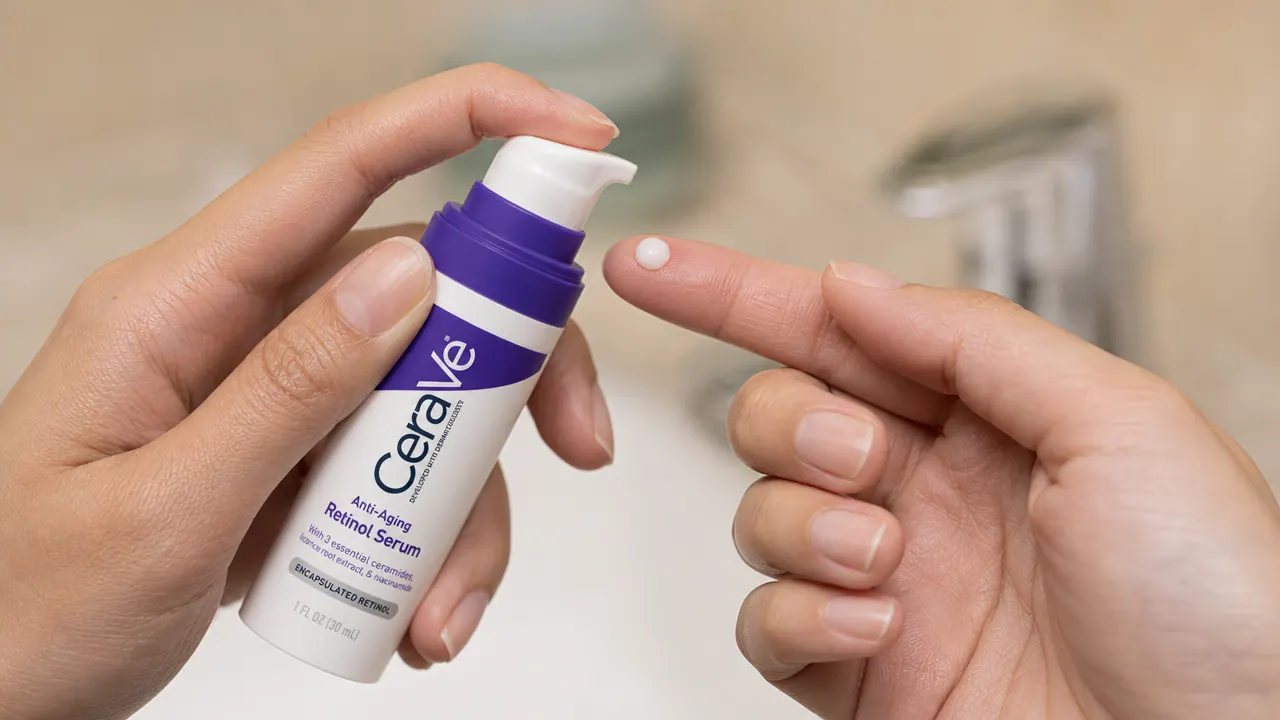
Encapsulation means the retinol molecule is wrapped inside a polymer shell. The shell breaks down slowly on the skin, releasing retinol in smaller amounts over a longer window. The upside: you are far less likely to get the intense retinization response that makes first-timers quit. The downside is the same thing framed differently: you are getting smaller amounts of active ingredient hitting your skin at any given moment.
CeraVe does not disclose the exact retinol concentration on the packaging, which is frustrating. Industry estimates based on texture and peer comparisons put it somewhere in the 0.1% to 0.2% range after accounting for encapsulation efficiency. For reference, The Ordinary Retinol 0.5% in Squalane starts at 0.5% unencapsulated. That difference matters if you are trying to close a ten-year gap on sun damage in a reasonable timeframe.
I want to be direct: if you have been using retinol for more than six months and you have already built up tolerance, this serum may feel like a step backward. You will not get the same pace of visible change that you got from a higher-strength formula. For complete beginners, though, that slower ramp is a genuine advantage rather than a limitation.
The niacinamide (5%) and ceramides in the formula are doing real work here. Niacinamide reduces transepidermal water loss, which is what makes standard retinol feel so drying on many people. The ceramides reinforce the skin barrier that retinol can temporarily weaken during the adjustment phase. Those two additions are not just marketing filler. They are the reason this serum stays comfortable through the full ten weeks while a naked 0.5% formula might not.
Texture and Packaging: The Honest Gripes
The serum has a slightly thicker consistency than I expected. It is not heavy, but it is not the water-thin texture of something like The Ordinary. On humid nights in spring, it felt a touch tacky before the moisturizer went on top. I got past it, but if you run warm or live somewhere humid, you will want to press it in firmly and give it that full two minutes to absorb before reaching for your next step.
The pump is my actual complaint. It is a small, low-pressure pump that requires multiple presses to get a full face's worth of product, and about a third of the time it sputters and leaves a blob on the top of the bottle instead of on my palm. CeraVe's pump design has been a known weak point across their serum line for years. It has not improved. You learn to work around it, but it is an annoyance on a nightly routine.
The bottle itself is opaque, which is correct for a retinol product since light degrades the active. No issue there. But it is also a bit squat and wide, which means it takes up more shelf real estate than a tall slim serum would. Minor, but worth noting if you have a packed bathroom counter.
By week eight, my forehead lines looked marginally softer. By week ten, a coworker asked if I had changed something. That is encapsulated retinol in honest terms: real results, just on a longer clock.
Where It Disappointed Me
I want to name the three ways this serum fell short of what I hoped for, because most reviews skip this part.
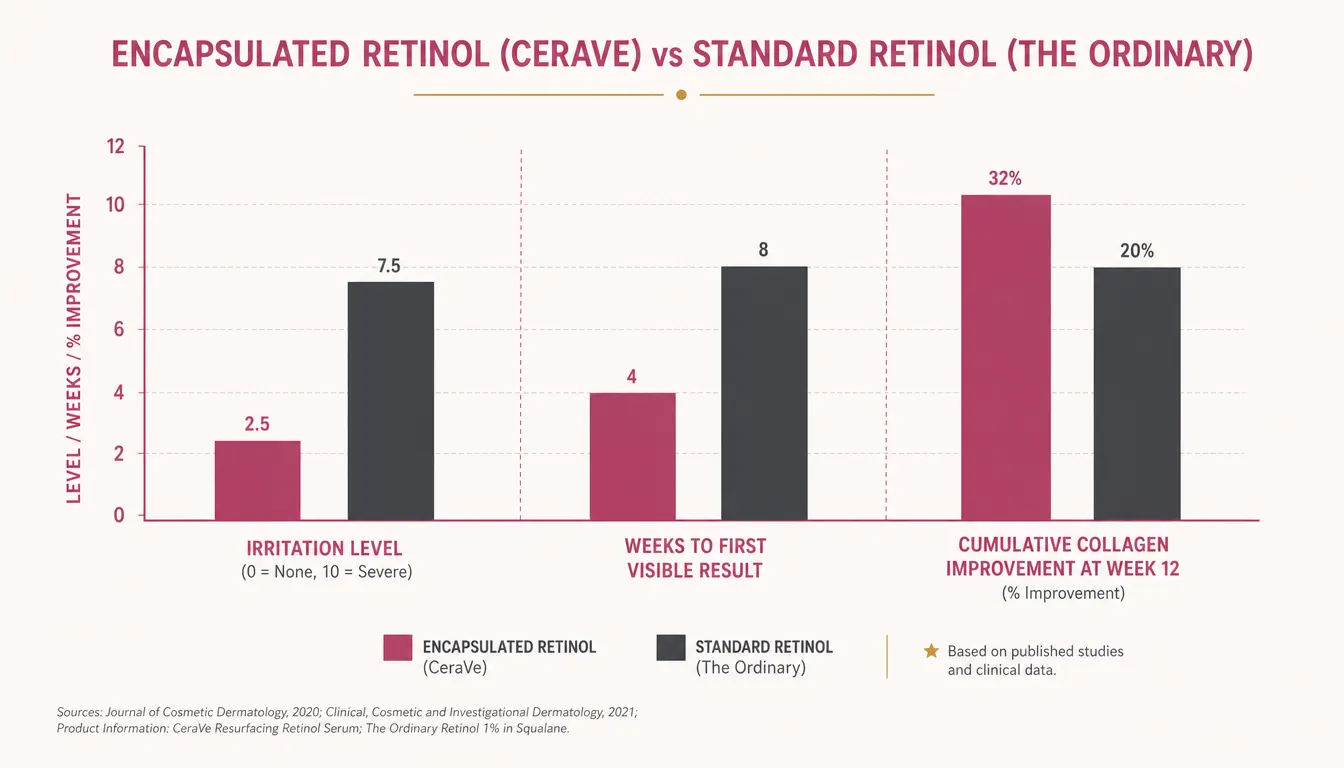
First, the timeline. Ten weeks to get comments from one coworker is not a dramatic before-and-after. If you came to retinol because you want faster, more aggressive texture correction, you will hit a wall of patience you may not be willing to maintain. The 28,099 Amazon reviews skew toward people who had never used retinol and are comparing it to no retinol. Compared to something with a higher active load, the improvement curve is genuinely flatter.
Second, the opacity around concentration. A brand that charges a premium, gets derm endorsements, and sits in CVS next to products with clear labeling should be willing to tell me how much retinol is actually in the bottle. They don't. I understand the formulation complexity that makes it hard to state a 'usable' concentration for encapsulated formats, but the opacity still bothers me. You are flying a bit blind on whether you are using an appropriate amount for your skin's stage.
Third, deep lines. I have a line between my brows that has been there since my early 30s. After ten weeks, it looks exactly the same. I was not expecting a miracle, but I did hope for some softening. None. That groove is probably beyond what any over-the-counter retinol at this concentration range is going to shift without months more patience or a prescription-strength product.
What I Liked
- No meaningful irritation through ten weeks of nightly use
- Niacinamide and ceramide support keeps barrier intact during the adjustment phase
- Genuine texture improvement visible by weeks eight to ten
- Fragrance-free and widely available without a prescription
- Affordable enough to maintain a consistent six-month commitment without budget stress
- Opaque bottle protects retinol stability correctly
Where It Falls Short
- Results come on a slower clock than standard retinol formulas at equivalent or lower price
- Concentration is not disclosed, making it hard to benchmark or step up strategically
- Pump mechanism is unreliable and a known weak point across the CeraVe serum line
- Slightly tacky texture on humid nights before absorption is complete
- Will not move deep, established lines at this concentration level
- Experienced retinol users may find it feels like a downgrade in activity
How It Compares to The Ordinary Retinol
I have used The Ordinary Retinol 0.5% in Squalane as my reference point. At the same nightly cadence, I saw visible texture improvement by week five on the standard formula, versus week eight on this CeraVe formula. The Ordinary formula also produced about two weeks of mild peeling and redness in weeks two and three, which I managed with extra moisturizer. On the CeraVe, I got none of that, but I also gave up three weeks of visible progress.
If you want to dig into that comparison more carefully, including price per milliliter and which formula works better for specific concerns, I have a full side-by-side in the CeraVe vs The Ordinary Retinol comparison. The short version: for people who have already built retinol tolerance, The Ordinary's standard retinol delivers faster results at a lower cost. For people who have never used retinol, CeraVe's gentler ramp is often the difference between quitting at week two and actually completing a full course. See the full retinol comparison for the detail.
Starting Retinol the Right Way
Regardless of which formula you choose, how you introduce retinol matters as much as which one you pick. The most common reason people abandon retinol is jumping in too fast and getting a rough initial reaction that makes them conclude retinol is not for their skin type. Most of the time, the problem is the protocol, not the ingredient. I have a separate guide on how to start retinol without irritation that covers the every-other-night ramp, buffering technique, and what to expect week by week.
Who This Is For
This serum earns a genuine recommendation for three groups. First, retinol beginners who have read enough horror stories about flaking and purging that they have been stalling for years. The encapsulation format and supportive formula reduce those risks meaningfully and give you a credible chance of actually sticking with it long enough to see results. Second, people with sensitive or reactive skin who have tried standard retinols and gotten too much irritation to continue. Third, people in their late 20s or early 30s who want to start retinol for prevention rather than correction. At that stage, the lower concentration is appropriate, the results will feel satisfying, and you are building a long-term habit at the right intensity.
Who Should Skip It
If you have been using retinol consistently for six or more months and have already acclimated, this serum is probably a step down from what your skin is ready for. You will be trading results pace for gentleness you no longer need. If your primary concern is deep wrinkles or significant photoaging, you need a higher concentration than this formula likely delivers, or a conversation with a dermatologist about prescription tretinoin. And if the pump design alone is going to bother you on a daily basis, the Olay Regenerist Retinol24 line offers a cleaner dispensing experience at a comparable price point.
Ready to start retinol without the redness and peeling that makes most people quit?
CeraVe's encapsulated formula is the lowest-risk on-ramp for a retinol routine, and the niacinamide and ceramide support means most skin types get through the adjustment phase without drama. Check today's price on Amazon and see if it is in stock.
Amazon Check Today's Price on Amazon →